After water damage, the first step is to stop the water at the main shutoff valve, then make the area safe by cutting power to wet rooms (only from a dry spot) and keeping everyone away from sagging ceilings and sewage. Next, photograph everything, call your insurer, and get drying started. The EPA says water-damaged areas and items should be dried within 24 to 48 hours to prevent mold growth, so the clock starts the moment you find the water.
This checklist splits the job into the first hour, the first 24 hours and the first 48 hours. Print it, or keep it open on your phone while you work.
The first hour: stop it and stay safe
1. Stop the water
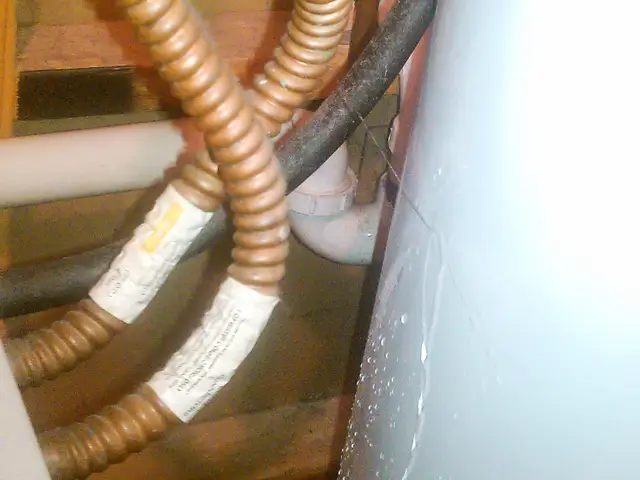
Close the main water shutoff. In most homes it is where the water line comes through the foundation wall, in a basement, crawlspace, garage or utility closet, or next to the water meter. If the leak is from one fixture, the small valve under the sink, toilet or behind the washer may be enough. A water heater has its own cold-water valve on the top of the tank (see water heater leaking: what to do).
2. Deal with electricity
Water and electricity together are the main danger in the first hour. Ready.gov's flood guidance is direct: do not touch electrical equipment if it is wet or if you are standing in water. Turn off the breakers for wet rooms only if you can reach the panel while standing somewhere dry. If the panel is in the wet area, leave it and call the power company or an electrician. FEMA's flood repair guide says never to go into a basement with standing water unless you are sure the electricity is off.
3. Check for gas and structural hazards
If you smell gas, leave the house and call the gas company from outside. FEMA and CDC guidance says to look for sagging ceilings or floors before working. A ceiling that bulges with water can come down, so keep people and pets out of that room. Put a bucket under the drip and stay out from under the bulge.
4. Identify the water
Clean water from a supply line is a different job from a toilet overflow or sewer backup. Sewage and floodwater are Category 3 under the IICRC S500 standard and can carry bacteria and viruses. Do not wade in it, and keep children away. See sewage backup cleanup.
5. Move what you can
Lift furniture onto blocks or foil, take rugs off wet floors, and move electronics, documents and photos to a dry room.
The first hour checklist
| Time | Action | Why |
|---|---|---|
| Minutes 0 to 10 | Close the main water shutoff | Every minute adds gallons |
| Minutes 0 to 10 | Power off to wet rooms, from a dry spot only | Shock risk |
| Minutes 10 to 20 | Leave if gas smell, sewage or sagging ceiling | Safety |
| Minutes 10 to 30 | Photos and video before moving anything | Insurance proof |
| Minutes 20 to 60 | Move valuables, lift furniture, mop up | Limit spread |
| Within the hour | Call a restoration company and your insurer | Drying window is 24 to 48 hours |
Water still spreading?
One free call connects you with a local restoration company. Lines are open 24/7 and there is no obligation.
The first 24 hours: document, report and remove water
Photograph and video everything
Before cleanup, record the source, standing water, every wet surface and damaged belongings. The Texas Department of Insurance says to take pictures because your insurer will ask for them. Keep shooting as work progresses.
Call your insurer
Report the claim, get a claim number and note the name of who you spoke to. Ask whether they want to send an adjuster before wet materials are removed. Do not make permanent repairs until the adjuster has seen the damage, but do make temporary repairs and keep the receipts. The insurance claim tips guide covers this in detail.
Get standing water out
A wet/dry vacuum handles small amounts. For more than a few inches, or water across several rooms, a restoration crew uses truck-mounted or portable extraction, which removes far more water than mopping and shortens drying time. Emergency water removal explains what that involves.
Open up and start moving air
FEMA and CDC guidance says to open doors and windows when it is safe, open closets and cabinet doors, pull drawers out to dry, and, when electricity is safe, use fans and dehumidifiers. Skip the fans if you already see mold, because they spread spores.
Pull out what will not dry
Soaked carpet pad, wet cardboard boxes, and anything wet with floodwater that cannot be cleaned and dried completely within 24 to 48 hours should go, according to FEMA and CDC. Photograph and keep a small sample of anything you discard for the adjuster.
The first 48 hours: dry it properly
Find the hidden water
Water wicks up drywall and runs under flooring, into wall cavities and down to the subfloor. Surfaces can feel dry while the material inside stays wet. Restoration companies use moisture meters and often thermal cameras to map it. Stains spreading after the leak stopped, swelling baseboards and a musty smell are signs water is still trapped.
Decide what to save
Clean-water drywall that is dried fast can often be saved; drywall soaked with sewage or floodwater usually comes out. Carpet follows a similar rule. The guide on whether wet drywall can be saved explains how crews make that call.
Keep humidity down
The EPA recommends keeping indoor humidity below 60 percent, ideally 30 to 50 percent. A cheap hygrometer tells you whether the dehumidifier is keeping up.
Hold off on the HVAC
The EPA says not to run the HVAC system if you know or suspect it is contaminated with mold. If ducts took on water, have them checked before turning the system on.
What not to do
- Do not use a household vacuum on water.
- Do not walk under a sagging ceiling or poke it while standing below it.
- Do not paint or caulk over damp or moldy areas. CDC and FEMA say paint does not stop mold growing.
- Do not mix bleach and ammonia.
- Do not run gas generators or pumps indoors.
- Do not throw out damaged items without photos.
When to call a restoration company
Call when water has soaked into walls, ceilings, carpet or insulation, when it covers more than one room, when it came from a sewer or outside floodwater, or when you cannot get it dry within two days. The how long does water damage take to dry guide explains what professional drying looks like.
Water still spreading?
One free call connects you with a local restoration company. Lines are open 24/7 and there is no obligation.
One free call connects you with an independent local restoration company. Lines are open 24/7, there is no obligation to hire, and the company can explain on the phone what it would do first in your situation.
Common questions
What is the first thing to do after water damage?
Stop the water. Close the main water shutoff valve, which is usually where the water line enters the house or near the meter. If water is near outlets or the electrical panel, turn the power off only if you can reach the breaker from a dry spot.
How long do I have to dry out water damage before mold grows?
The EPA says water-damaged areas and items should be dried within 24 to 48 hours to prevent mold growth. FEMA says mold colonies can start to grow on a damp surface within 24 to 48 hours.
Should I use a fan on water damage?
Yes, once electricity is safe to use, fans and dehumidifiers help. FEMA and CDC guidance says not to use fans if mold has already started to grow, because they can spread spores.
Can I stay in my house after water damage?
Often you can if the water was clean, the area is small and power is safe. Leave if there is sewage, a gas smell, sagging ceilings or floors, or wet wiring, and do not return until those hazards are fixed.
Do I need a professional after water damage?
For a small spill on a hard floor, usually not. If water soaked into drywall, carpet, insulation or a ceiling, came from a sewer, or covers more than one room, professional extraction and drying with moisture meters is the safer choice.