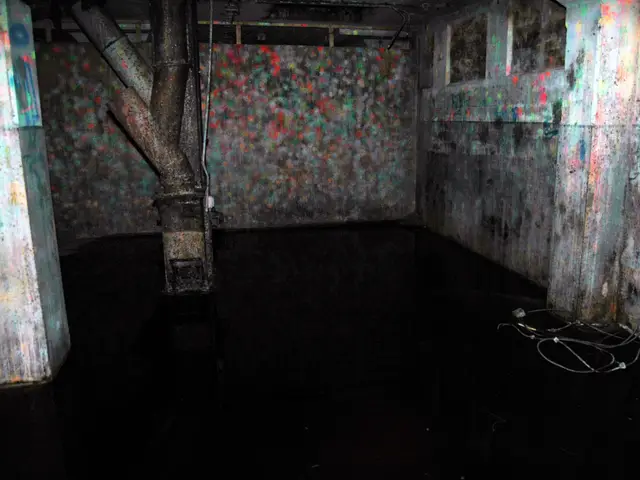
Emergency water removal starts with you, not the crew: shut off the main water valve, switch off power to the wet area if the breaker panel is somewhere dry, and get people and pets out of standing water. Then call. One free call connects you to an independent local restoration company, and the lines are open 24/7. The goal is to have the water out and the drying started well inside the 24 to 48 hour window that EPA gives before mold usually begins to grow.
The next 10 minutes
Most of the damage from a water leak happens after the first hour, when water wicks up drywall, soaks into carpet pad and spreads under flooring. What you do right now limits how far it travels.
- Stop the source. The main shutoff is usually where the water line enters the house: basement wall, crawl space, garage or a utility closet. For a single fixture, use the valve under the sink, toilet or behind the washer.
- Kill the power to wet rooms. Only do this if you can reach the panel without standing in water. If the panel is in the wet area, stay out and tell the company when you call.
- Move what you can. Lift rugs, electronics, papers and photos onto higher, dry ground. Put foil or plastic under furniture legs so stain does not bleed into wet carpet.
- Take photos and video before anything is moved further. Your insurer will want them.
- Make the call, even if the water seems to have stopped. Water you cannot see is the part that causes the expensive repairs.
What the crew does when they arrive
The company you are connected with will usually work to the ANSI/IICRC S500 Standard for Professional Water Damage Restoration, now in its fifth edition (2021). It is the industry's reference for how a water loss should be inspected, extracted, dried and documented. A typical visit looks like this:
- Inspection and safety check. The crew confirms the source is stopped, checks for electrical hazards and decides which water category they are dealing with (clean, gray or sewage).
- Moisture mapping. Meters and thermal cameras show how far water has moved into walls, subfloors and cabinets, which is usually further than the visible stain.
- Extraction. Truck-mounted or portable extractors pull water out of carpet and pad, and pumps handle deeper standing water.
- Removal of what cannot be dried. Soaked carpet pad, swollen baseboards and the bottom of wet drywall are often cut out so the cavity can dry.
- Drying. Air movers push air across wet surfaces and dehumidifiers pull the moisture out of the room.
- Monitoring. Readings are taken and logged on return visits until materials reach dry targets. Those logs also support your insurance claim.
Water still spreading?
One free call connects you with a local restoration company. Lines are open 24/7 and there is no obligation.
What emergency water removal costs
Price depends on how much area is wet, how contaminated the water is and how long it sat. These ranges come from published cost guides, not from any one company.
| Item | Typical cost | Source |
|---|---|---|
| Full water damage restoration, national average | $3,868 | HomeAdvisor |
| Most common range for a whole job | $1,383 to $6,369 | HomeAdvisor |
| Extraction, clean water (Category 1) | $3.75 to $4.25 per sq ft | Fixr |
| Extraction, gray water (Category 2) | $4.10 to $6.50 per sq ft | Fixr |
| Extraction, sewage water (Category 3) | $7 to $7.50 per sq ft | Fixr |
| Emergency or after-hours fee | $50 to $200 | Fixr |
| Restoration labor | $70 to $200 per hour | Fixr |
HomeAdvisor's full range runs from $450 for a small, quick dry-out to $16,000 for a large loss. For a rough number based on your own square footage and water type, try the water damage cost calculator, and for a full breakdown read the water damage restoration cost guide.
The insurance side
A standard homeowners policy (HO-2 and above) covers "accidental discharge or overflow of water or steam" from plumbing, heating and air conditioning systems and household appliances, according to the Insurance Information Institute. That covers most burst pipes and failed supply hoses. The same source is clear that flood damage and sewer backups are not covered unless you added flood insurance or a backup endorsement.
Water damage is common and expensive. Triple-I data puts the average water damage and freezing claim at $15,400 over 2019 to 2023. Call your insurer early, keep every receipt and ask the restoration company whether they bill the insurer directly. Our guide to whether homeowners insurance covers water damage goes through the common exclusions.
How long it takes
Extraction itself is often finished on the first visit. Drying is the slow part: equipment typically runs for several days, and the crew returns to take readings until the materials are dry. Dense materials like hardwood, plaster and concrete take longer than carpet and drywall. The guide on how long water damage takes to dry covers what speeds it up and what slows it down.
What you can safely do while you wait
- Mop and blot hard floors with towels.
- Open windows if the air outside is drier than inside.
- Run a wet/dry vac on small areas of clean water, plugged into a dry outlet away from the water.
- Keep doors to unaffected rooms closed.
Do not use a household vacuum on water, do not turn on ceiling fans or lights in a room with a wet ceiling, and do not run the central HVAC if it may have pulled in contaminated water. EPA advises against running a system you suspect is contaminated with mold.
When it becomes dangerous
Leave the area and say so on the phone if any of these apply:
- Water is touching outlets, cords, a power strip or the electrical panel.
- The water smells like sewage or came up through a floor drain or toilet. That is Category 3 water, and EPA says contaminated-water damage should be handled by professionals with that experience.
- A ceiling is bulging, sagging or dripping through a light fixture.
- You smell gas, or the water heater or furnace is standing in water.
What to ask on the phone
- Do your technicians hold IICRC water restoration certification?
- How do you decide which materials to remove and which to dry in place?
- Will you take moisture readings and share the drying logs?
- Do you work with my insurance company, and do you bill them directly?
- Is there an emergency or after-hours fee, and how is the job priced?
- Who handles rebuild work like drywall and flooring, or is that separate?
Water still spreading?
One free call connects you with a local restoration company. Lines are open 24/7 and there is no obligation.
The call is free and you are under no obligation to hire. If the water is clean and confined to one small hard-floored room, you may be able to handle it yourself. If it has reached carpet, walls or a lower floor, or you are not sure where it came from, a crew with meters and drying equipment is the safer bet. If your basement is the problem, the flooded basement cleanup page has steps specific to below-grade water.
Common questions
How fast does standing water need to be removed?
As fast as possible. EPA says that if wet materials are dried within 24 to 48 hours, mold will not grow in most cases. Extraction is the first step toward that deadline, so every hour of standing water makes drying slower and more expensive.
How much does emergency water removal cost?
HomeAdvisor puts the national average for water damage restoration at $3,868, with most jobs between $1,383 and $6,369. Fixr lists extraction alone at roughly $3.75 to $4.25 per square foot for clean water and $7 to $7.50 for sewage water, plus a possible $50 to $200 emergency fee.
Can I use a shop vac instead of calling a company?
A wet/dry vac can handle a small puddle of clean water on a hard floor. It will not pull water out of carpet pad, wall cavities or subfloors, and it gives no moisture readings, so hidden water often stays behind and turns into mold later.
Will homeowners insurance pay for water removal?
Usually, when the water came from a sudden and accidental event such as a burst pipe or a failed appliance hose. The Insurance Information Institute notes that flood damage and sewer backup are excluded from standard policies unless you bought separate flood cover or a backup endorsement.
Do I have to hire the company I am connected with?
No. The call is free and there is no obligation to hire. You can ask about price, insurance billing and the drying plan, then decide.
Sources
- HomeAdvisor: How Much Does Water Damage Restoration Cost?
- Fixr: Water Damage Restoration Cost
- EPA: A Brief Guide to Mold, Moisture and Your Home
- IICRC: ANSI/IICRC S500 Standard for Professional Water Damage Restoration
- Insurance Information Institute: Which disasters are covered by homeowners insurance?