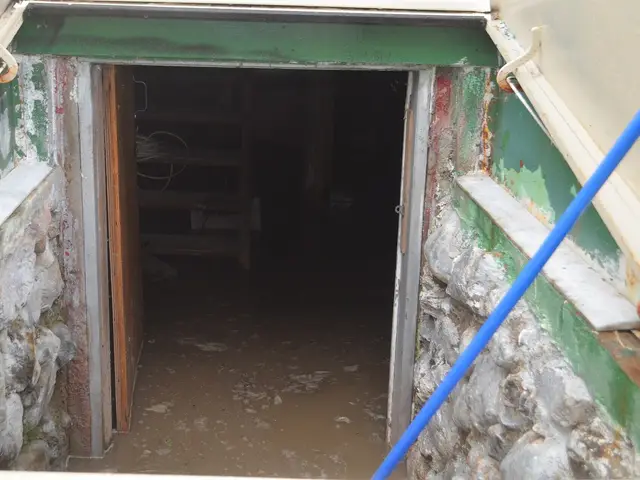
Flooded basement cleanup starts at the top of the stairs: do not walk into the water until the power to the basement is off, because the panel, outlets, furnace and water heater are often down there. Shut the main water valve if the source is a pipe or appliance, then call. One free call connects you with an independent local restoration company, lines are open 24/7, and HomeAdvisor puts most basement cleanups between $2,000 and $7,000.
Your first 10 minutes
- Do not step into the water if it could be touching outlets, extension cords or the electrical panel. If the panel is in the basement and the floor is wet, leave it alone and ask the utility or an electrician to disconnect power.
- Find the source. A burst pipe, failed water heater or washer hose is inside the house and can be shut off. Water coming through the walls or floor after rain is groundwater. Water coming up a floor drain or toilet is a sewer backup.
- Shut off the main water valve if the water is from your own plumbing.
- If you smell gas, leave the house and call the gas company from outside.
- Take photos and video of the water level, the source and damaged belongings before anything moves.
- Call and describe the depth, the source and whether the water smells. That tells the company what equipment to bring.
What the crew does in a flooded basement
The company you are connected with should follow the ANSI/IICRC S500 standard for water damage restoration. In a basement that usually means:
- Safety and source check. Confirming power is off, gas appliances are safe and the source is stopped or understood.
- Water category. Clean water from a supply line is handled differently from groundwater or sewage. CDC notes floodwater can carry human and livestock waste and chemicals, so contaminated water calls for protective gear and disinfection.
- Pumping and extraction. Submersible pumps for deep water, then extractors for carpet and the last inch or two.
- Staged pumping when the ground is saturated. EPA warns that if water is several feet deep, removing it too quickly may make the walls and floor crack and collapse. A crew will watch the level and pump in steps.
- Tear-out. Wet carpet pad, the bottom of finished drywall, wet insulation and swollen trim are usually removed so wall cavities can dry.
- Drying and monitoring. Air movers and dehumidifiers run while the crew takes daily moisture readings, aiming to get materials dry inside the 24 to 48 hour window EPA links to mold prevention.
Water still spreading?
One free call connects you with a local restoration company. Lines are open 24/7 and there is no obligation.
Flooded basement cleanup cost
HomeAdvisor's 2026 figures give an average of $4,000, a normal range of $2,000 to $7,000 and about $3 to $7 per square foot. The water category moves the price more than anything else.
| Factor | Typical cost (HomeAdvisor) |
|---|---|
| 500 sq ft basement | $1,500 to $3,500 |
| 1,000 sq ft basement | $3,000 to $7,000 |
| 2,000 sq ft basement | $6,000 to $14,000 |
| Category 1, clean water | $1,500 to $3,500 |
| Category 2, gray water | $3,000 to $7,000 |
| Category 3, sewage or floodwater | $7,000 to $15,000 |
| Carpet replacement | $1,000 to $5,000 |
| Drywall repair | $500 to $2,500 |
| Mold removal, if needed | $500 to $6,000 |
Plug your own square footage into the water damage cost calculator for a rough number, and see the water damage restoration cost guide for what drives the final bill.
What insurance usually covers
Where the water came from decides the claim. The Insurance Information Institute says standard homeowners policies (HO-2 and above) cover accidental discharge from plumbing, heating and air conditioning systems and household appliances, so a burst pipe or failed water heater is normally covered. The same source says flood damage is excluded from standard homeowners and renters policies, and sewer backups are covered by neither homeowners nor flood insurance unless you added a backup endorsement.
Call your insurer the same day, keep damaged items until the adjuster has seen them or you have photos, and ask the restoration company for its moisture logs. The page on flood insurance vs homeowners insurance explains which policy answers for which kind of water.
How long a basement takes to dry
Pumping and extraction are often done in a day unless the water must come out in stages. Drying concrete, framing and block walls usually takes several days with equipment running, and longer when the basement is finished or the water sat for a while. Rebuilding drywall, flooring and trim comes after the readings confirm everything is dry.
What you can safely do while you wait
- Move boxes, furniture and stored items off the wet floor once the power is off.
- Open basement windows if the outside air is dry, and run a dehumidifier plugged in upstairs if it is safe to reach.
- Bag up items soaked with sewage or floodwater for disposal, and photograph them first.
- Wear rubber boots, rubber gloves and goggles around contaminated water, as CDC advises, and wash with soap and clean water afterward.
Do not run gas-powered pumps or generators in the basement or garage. Carbon monoxide builds up fast in enclosed spaces. Our guide on what to do when your basement floods covers the full first-day checklist.
When it becomes dangerous
- Water is at or above outlet height, or touching the electrical panel.
- The furnace, boiler or gas water heater has been underwater. Do not relight it until it has been checked.
- Walls are bowing, cracking or leaking under pressure after heavy rain.
- The water came up from a floor drain or toilet. That is sewage, covered in more detail on the sewage backup cleanup page.
What to ask on the phone
- Can you pump deep water in stages if the ground outside is saturated?
- Are your technicians IICRC certified for water damage restoration?
- Will you take moisture readings on the concrete and framing, not just the carpet?
- Do you remove and dispose of contaminated drywall and carpet?
- Do you bill my insurer directly, and is there an emergency fee?
- Can you tell me whether this is groundwater, a plumbing leak or a sewer backup?
Water still spreading?
One free call connects you with a local restoration company. Lines are open 24/7 and there is no obligation.
The call is free and there is no obligation to hire. A small amount of clean water on a bare concrete floor is often a wet/dry vac and dehumidifier job. Water that reached drywall, carpet or stored belongings, or water that smells like sewage, is where a crew with pumps, meters and drying equipment saves money in the long run.
Common questions
How much does flooded basement cleanup cost?
HomeAdvisor reports an average of $4,000, with most jobs between $2,000 and $7,000, or about $3 to $7 per square foot. Clean-water jobs run $1,500 to $3,500 while sewage-contaminated basements run $7,000 to $15,000.
Should I pump out my flooded basement right away?
If the water came from a broken pipe or appliance, yes, once the power is off. If the basement filled because the ground outside is saturated after a storm, EPA warns that removing several feet of water too quickly can make walls and floors crack and collapse, so it should come out in stages.
Does homeowners insurance cover a flooded basement?
It depends on where the water came from. A burst pipe or failed water heater is usually covered as sudden and accidental discharge. Surface flooding needs a separate flood policy, and a backup through a floor drain or sump needs a sewer backup endorsement, according to the Insurance Information Institute.
Can basement carpet and drywall be saved?
Carpet soaked by clean water and dried quickly can sometimes be saved, but the pad usually cannot. Drywall that wicked up sewage or floodwater is normally cut out above the waterline, because EPA advises discarding porous materials that cannot be cleaned and dried.
Who do I call for a flooded basement?
A water damage restoration company handles extraction, drying and moisture monitoring. You may also need a plumber for a broken pipe, an electrician if water reached the panel, or a waterproofing contractor for seepage. One free call connects you with a local restoration crew 24/7.