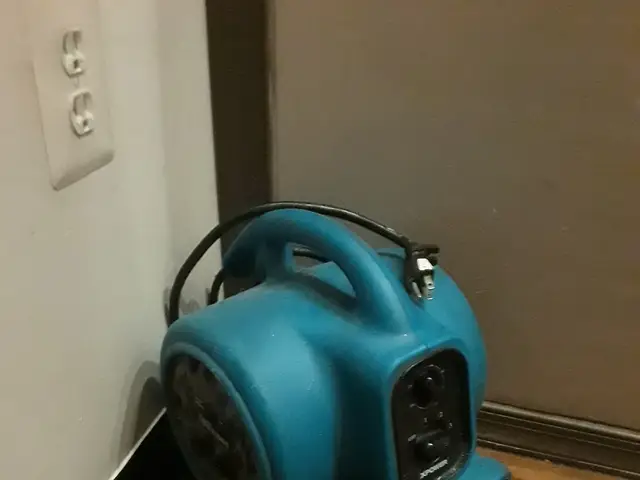
If your basement is flooded, do not step into the water until the power to the basement is off. Then stop the source if you can, photograph everything, and start removing water. If outside floodwater or groundwater caused it, FEMA's "Repairing Your Flooded Home" guide says to pump it out slowly, 2 to 3 feet a day, because draining too fast can let soil pressure crack and collapse the walls. Everything wet should be dried within 24 to 48 hours to prevent mold (EPA).
The right moves depend on where the water came from, so the first job is working that out.
Step 1: Make it safe before you go down
Electricity is the biggest risk in a flooded basement. FEMA's guide says never to go into a basement with standing water unless you are sure the electricity is off. If the breaker panel is upstairs, switch off the basement circuits while standing on a dry floor. If the panel is in the basement, do not wade to it: call the power company or an electrician.
Then check:
- Gas. If you smell gas, leave and call the gas company from outside. Gas appliances in basements can be damaged by water.
- Sewage. A sewer backup is Category 3 water. CDC guidance says to wear rubber boots and gloves during flood cleanup; with sewage, keep children and pets out and let a professional handle it. See sewage backup cleanup.
- Structure. Look for bowing walls, new cracks or sagging floor joists overhead. FEMA says to check the foundation for cracks before going in.
- Carbon monoxide. Never run a gasoline pump or generator inside the house or garage. FEMA and CDC warn it creates deadly exhaust.
Step 2: Find the source
| Source | Signs | First action | Usually covered by home insurance? |
|---|---|---|---|
| Burst or leaking pipe | Water spraying or pooling near pipes, running sound | Close main water valve | Often yes (sudden and accidental) |
| Water heater | Water around the tank base | Shut off power or gas and the cold-water valve | Damage often yes, tank often no |
| Washer or appliance hose | Water near laundry area | Close the appliance valve | Often yes |
| Sewer or floor drain backup | Water rising from floor drain, sewage odor | Stop using water upstairs | Only with a backup endorsement |
| Sump pump failure | Water around the sump pit | Check power, float, discharge line | Only with a backup endorsement |
| Groundwater or outside flooding | Water through walls, floor cracks, window wells | Wait for outside water to recede | No, needs flood insurance |
Coverage summary based on Triple-I and NFIP guidance. For a water heater, the water heater leaking guide covers shutoffs step by step.
Water still spreading?
One free call connects you with a local restoration company. Lines are open 24/7 and there is no obligation.
Step 3: Document it
Before moving anything, take video and photos of the water depth, the source, the walls, the furnace, water heater and washer, and every damaged item. Mark the water line on walls. If you have flood insurance, FloodSmart's checklist asks for photos from multiple angles and samples of carpet or flooring you discard. The water damage insurance claim tips guide covers the rest.
Step 4: Get the water out the right way
If the water came from inside the house
A burst pipe, failed water heater or appliance leak has no outside pressure behind it. Once the power is off and the source is stopped, the water can come out as fast as possible. A wet/dry vacuum handles an inch or two. For more, a submersible pump or professional extraction is faster. See flooded basement cleanup for how crews do it.
If outside floodwater or groundwater came in
Go slowly. FEMA explains that water in the ground outside is pushing hard against the basement walls, and the water inside is pushing back. Drain it too fast and "the pressure outside the walls will be greater than the pressure inside the walls," which can make the walls and floor crack and collapse.
FEMA's method:
- Wait until floodwater is no longer on top of the ground outside.
- Pump the water level down 2 to 3 feet. Mark the level and wait overnight.
- Check the next day. If the water rose back, it is too early. Wait another night, then pump down 2 to 3 feet again.
- When the water stops coming back up, pump down another 2 to 3 feet and wait overnight.
- Repeat until the basement is empty.
Step 5: Remove what cannot be saved
FEMA and CDC say to throw away anything wet with floodwater that cannot be cleaned and dried completely within 24 to 48 hours. In a basement that usually means carpet and pad, cardboard boxes, upholstered furniture, mattresses and insulation. CDC's flood guidance lists wall coverings, cloth, rugs and drywall among items that cannot be disinfected after floodwater.
With clean water from a pipe, more can be saved if drying starts fast. Drywall that wicked up floodwater is usually cut out above the water line.
Photograph and keep a sample of anything you throw away for the adjuster.
Step 6: Clean and dry
Shovel out mud while it is still wet; FEMA notes that the mud left by floodwater carries most of the health hazards. Wash hard surfaces with detergent and water. Then dry:
- Open windows and doors when the air outside is drier than inside.
- Run fans and dehumidifiers once the electricity is safe, as FEMA and CDC advise.
- Keep humidity below 60 percent, ideally 30 to 50 percent (EPA).
- Do not run the furnace or HVAC if the ductwork took on water until it has been checked.
Concrete and block hold a lot of water, so a basement often takes longer to dry than a room upstairs. The how long does water damage take to dry guide explains how moisture readings confirm it.
Insurance in one paragraph
Burst pipes and appliance failures are usually covered by homeowners insurance. Triple-I says sewer backups are not covered under a typical policy and need an endorsement, and flood damage needs a separate flood policy. FloodSmart notes that NFIP flood policies exclude personal property kept in basements, so stored belongings are often not covered even with flood insurance.
After it is dry
Fix the cause: replace the failed hose or heater, add a battery backup to the sump pump, extend downspouts, and consider a backwater valve and a water backup endorsement. If the basement floods often, storm and flood damage crews can advise on what failed.
Water still spreading?
One free call connects you with a local restoration company. Lines are open 24/7 and there is no obligation.
If there is more than an inch or two of water, sewage, or water in finished walls, one free call connects you with an independent local restoration company. Lines are open 24/7, there is no obligation to hire, and the company can tell you on the phone what to do until the crew arrives.
Common questions
Is it safe to walk in a flooded basement?
Not until the electricity is off. FEMA's flood repair guide says never to go into a basement with standing water unless you are sure the electricity is off. If the breaker panel is in the basement, call the power company or an electrician to disconnect service.
How fast should I pump water out of a flooded basement?
If the basement flooded from outside groundwater or floodwater, slowly. FEMA advises waiting until floodwater is no longer on the ground, pumping down 2 to 3 feet, marking the level and waiting overnight, and repeating until the water stops rising back. Pumping too fast can crack and collapse walls and floors.
Does homeowners insurance cover a flooded basement?
It depends on the cause. A burst pipe or failed water heater is often covered. Outside floodwater needs flood insurance, and sewer or sump pump backup needs a water backup endorsement. NFIP flood policies exclude personal property kept in basements.
Can I use a shop vac on a flooded basement?
For an inch or two of clean water, yes, if the power to the area is off and the vacuum is plugged into a safe outlet upstairs or a GFCI outlet. For deeper water, a submersible pump or professional extraction is faster. Never run a gas pump or generator inside.
How long does a flooded basement take to dry?
Professional drying usually takes several days after the water is out, longer if concrete, framing and finished walls are soaked. Concrete and block walls hold water, so drying should be confirmed with moisture readings rather than by touch.
Sources
- FEMA and American Red Cross: Repairing Your Flooded Home (FEMA P-234)
- FloodSmart (NFIP): What flood insurance covers
- Insurance Information Institute: Which disasters are covered by homeowners insurance?
- FEMA and CDC: Homeowner's and Renter's Guide to Mold Cleanup After Disasters
- CDC: Flood safety
- EPA: A Brief Guide to Mold, Moisture and Your Home