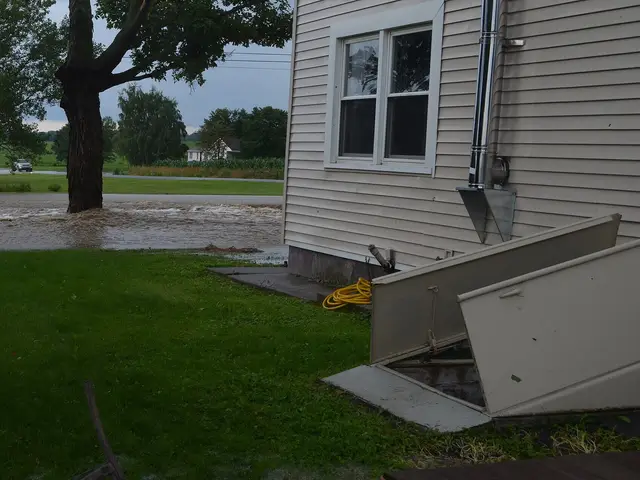
Yes, homeowners insurance usually covers water damage when it is sudden and accidental, like a burst pipe, a split washing machine hose or a water heater that fails without warning. It usually does not cover floodwater coming in from outside, a leak that dripped for months, groundwater seepage, or damage caused by poor maintenance. Sewer and drain backups are a third group: excluded unless you added a water backup endorsement.
Water claims are common. The Insurance Information Institute (Triple-I) reports that about 1 in 60 insured homes files a water damage or freezing claim each year, and those claims averaged $15,400 from 2019 to 2023. Knowing which side of the line your loss falls on helps you file the right way the first time.
The short answer by cause
This table summarizes how a standard HO-3 policy usually treats common causes, based on Triple-I, NAIC and NFIP guidance. Your own policy wording always wins, so check the declarations page and exclusions.
| Cause of water damage | Standard HO-3 | What you would need instead |
|---|---|---|
| Burst or frozen pipe | Usually covered | Heat kept on and reasonable care |
| Appliance or supply hose failure | Usually covered | Nothing extra |
| Water heater tank rupture | Damage usually covered, the heater itself often not | Nothing extra |
| Roof leak from a storm | Usually covered | Nothing extra |
| Slow leak or seepage over weeks | Usually excluded | Repair and maintenance |
| Flood or rising surface water | Excluded | NFIP or private flood policy |
| Sewer or drain backup | Excluded | Water backup endorsement |
| Sump pump overflow | Excluded or limited | Water backup endorsement |
| Mold from long-term moisture | Excluded | Limited mold coverage, if offered |
What "sudden and accidental" means
Most policies cover water damage that happens suddenly and by accident. The Texas Department of Insurance puts it plainly: a leak or overflow that happens suddenly is the target, and "it's not a leak that's been dripping for a long time."
Triple-I's guidance on the HO-3 says it covers "accidental discharge of water from a plumbing system," and HO-2 and better policies also cover freezing of plumbing, heating, air conditioning and sprinkler systems. A pipe that splits in a cold snap, a dishwasher line that lets go, or a toilet supply line that bursts all fit that description.
Gradual damage is the most common denial
Triple-I's guidance says water seepage is excluded under the HO-3 because "seepage is viewed as a maintenance issue." Rot, staining, warped subfloor and mold that show a leak has been going on for a long time are signs an adjuster will look for. If you find a slow leak, fix it and document it right away. The guide on signs of hidden water damage shows what to look for before it becomes a claim problem.
Water still spreading?
One free call connects you with a local restoration company. Lines are open 24/7 and there is no obligation.
HO-3 basics in plain English
The NAIC describes the Special Form (HO-3) as the most popular homeowners form. It insures your property against all perils except those the policy specifically names as not covered, and flood and earthquake are the exclusions people meet most often.
That structure matters. Under an open-perils form, the insurer generally has to point to an exclusion to deny a claim, which is why the arguments in water claims are almost always about flood, seepage, wear and tear, or backup. Older or cheaper forms (Basic and Broad) only cover a listed set of perils, so check which form you have.
The flood exclusion
Homeowners policies do not cover flood. The NAIC says so directly, and FloodSmart, the federal National Flood Insurance Program site, says most homeowners and renters insurance does not cover flood damage. Flood usually means surface water from rain, rivers or storm surge that rises over normally dry land and into the house.
NFIP policies cover up to $250,000 for the building and $100,000 for contents. Coverage normally starts 30 days after purchase, so it cannot be bought once a storm is forecast. NFIP policies also exclude personal property kept in basements. The guide on flood insurance vs homeowners insurance compares the two.
Sewer backup needs an endorsement
Triple-I says sewer backups are not covered under a typical homeowners policy and must be bought as a separate product or as an endorsement, usually at a nominal cost. The NAIC adds that endorsements may be available for sewer or drain backups and sump pump overflow because most policies offer limited or no coverage for them. If you have a basement, this is worth checking today. Sewage is also a health hazard: see sewage backup cleanup before touching it.
Mold coverage is limited
Texas Department of Insurance guidance says mold is covered if it is on something the home policy would replace, while professional remediation services may be excluded. Triple-I lists mold among things not covered when it comes from lack of maintenance. Many policies cap mold payments. The faster the home is dried, the less this matters.
The parts that confuse people
The pipe vs the water
When a pipe or water heater fails, the policy usually pays for the damage the water caused, not the worn-out part. A tank that rusted through at 14 years old is a maintenance item; the soaked drywall and flooring around it are often covered.
The deductible
You pay the deductible on each claim. The NAIC suggests that if the repair is not much more than your deductible, you might pay for it yourself, because claim history can affect your premium and renewal.
Your duty to stop more damage
Policies require you to protect the property from further damage. The NAIC gives the example of cleaning up water from a backed-up drain. Calling a restoration company to extract water and start drying is part of that duty, and insurers generally expect it. Keep the invoices.
How to give your claim the best chance
- Stop the water and make the area safe. Shut off the main valve and, if water is near outlets or the panel, the power.
- Photograph and video everything before anything is moved.
- Call your insurer or agent as soon as possible and get a claim number.
- Start mitigation. Wet materials begin growing mold within 24 to 48 hours, and mold from delay can be excluded.
- Keep damaged samples and receipts until the adjuster says otherwise.
The full checklist is in water damage insurance claim tips, and what to do after water damage covers the first 48 hours.
When to call a crew
If water is still spreading, has reached walls or ceilings, or came from a sewer line, drying it properly is not a towel-and-fan job. A restoration company documents moisture readings and drying progress, which adjusters use to check the scope of the claim.
Water still spreading?
One free call connects you with a local restoration company. Lines are open 24/7 and there is no obligation.
The call is free and there is no obligation to hire. Lines are open 24/7, and one call reaches an independent local restoration company that can start extraction and give you the documentation your insurer will ask for. No one can promise a claim will be approved, but good records help.
Common questions
Does homeowners insurance cover a burst pipe?
Usually yes. The Insurance Information Institute says the HO-3 covers accidental discharge of water from a plumbing system, and HO-2 and better policies cover freezing of plumbing systems. The insurer may still ask whether the home was heated and maintained.
Is a slow leak under the sink covered?
Usually not. Texas Department of Insurance guidance explains that sudden and accidental coverage is not meant for a leak that has been dripping for a long time. Insurers treat long-term seepage as a maintenance issue.
Does homeowners insurance cover a flooded basement?
It depends on the source. A burst pipe or failed water heater in the basement is often covered, but groundwater or rising floodwater is not. Sewer and sump pump backups need a water backup endorsement, and NFIP flood policies exclude personal property kept in basements.
Is mold covered after water damage?
Coverage is limited. Many policies pay for mold only when it results from a covered water loss, and some cap that amount. Mold from long-term humidity or neglected leaks is usually excluded.
Will filing a water damage claim raise my premium?
It can. The NAIC notes that how often you file and the types of claims you file can affect your premium and whether the insurer renews your policy. If the repair is not much more than your deductible, paying yourself may make sense.
Sources
- Insurance Information Institute: Am I covered?
- Insurance Information Institute: Which disasters are covered by homeowners insurance?
- NAIC: A Consumer's Guide to Home Insurance
- Texas Department of Insurance: What insurance do you need for water damage?
- FloodSmart (NFIP): What flood insurance covers
- Insurance Information Institute: Facts and Statistics, Homeowners and Renters Insurance