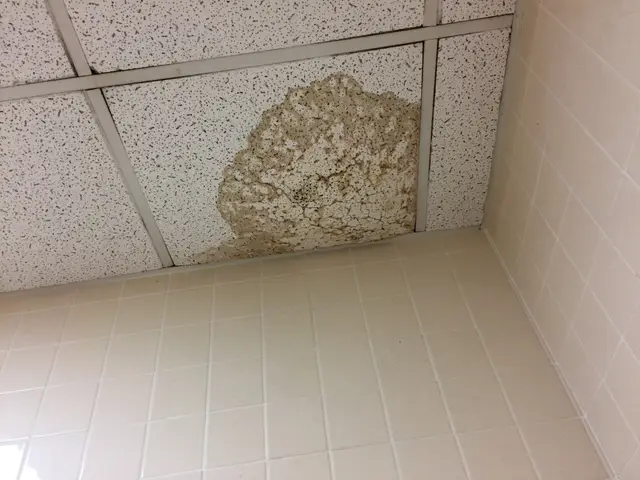
Ceiling water damage repair starts with safety: if the ceiling is bulging, sagging or dripping through a light fixture, get everyone out of the room and switch off that circuit at the breaker. Then stop the source, whether that is a bathroom upstairs, a pipe, an appliance or the roof. HomeAdvisor puts most ceiling repairs at $438 to $1,718, but the drying above the ceiling has to happen first. One free call connects you with an independent local restoration company, 24/7.
The next 10 minutes
- Clear the room below the wet area and move furniture, rugs and electronics out of the drip zone.
- Turn off the breaker for any ceiling light, fan or smoke detector in the wet section.
- Put buckets or a tarp under active drips.
- Find and stop the source. Shut the supply valve to an upstairs toilet, sink or appliance, or the main water valve if you cannot tell which line is leaking.
- If the water is coming from the roof during a storm, do not go up there. Catch the water inside and call.
- Photograph the stain, the sag and the source for your insurer.
Where ceiling water comes from
The source decides how urgent the job is and whether the water is clean.
- Upstairs bathroom: a leaking toilet wax ring, failed shower pan, overflowing tub or supply line. Toilet water can be contaminated.
- Plumbing in the ceiling: a burst or pinhole leak in a supply line, often after a freeze. See burst pipe water damage.
- Appliances: an upstairs washer, a water heater in the attic, or an air conditioner air handler with a clogged condensate line. The appliance leak water damage page covers these.
- Roof and ice dams: the Insurance Information Institute explains that ice damming happens when water cannot drain through the gutters and instead seeps into the house.
Water still spreading?
One free call connects you with a local restoration company. Lines are open 24/7 and there is no obligation.
What the crew does on arrival
The company you are connected with should follow the ANSI/IICRC S500 standard for water damage restoration. A ceiling job usually goes like this:
- Safety first. The crew checks for live wiring and how much weight the ceiling is holding, and drains a water-filled bulge in a controlled way rather than letting it drop.
- Moisture mapping. Meters and thermal cameras trace how far the water spread across the ceiling and down the walls. Water often runs along joists well past the visible stain.
- Remove what cannot be saved. Sagging or soft drywall, wet insulation above it and stained ceiling tiles are usually cut out. EPA notes that absorbent materials such as ceiling tiles may need to be thrown away if they become moldy.
- Dry the cavity. Air movers and dehumidifiers, and sometimes drying mats or ceiling-cavity drying systems, work on the joists and subfloor above.
- Monitor and document. Readings are logged on follow-up visits until the framing is dry, which is what the drywall contractor needs before closing the ceiling.
Ceiling water damage repair cost
| Item | Typical cost | Source |
|---|---|---|
| Ceiling repair, national average | $1,078 | HomeAdvisor |
| Ceiling repair, most common range | $438 to $1,718 | HomeAdvisor |
| Ceiling repair, full range | $150 to $4,500 | HomeAdvisor |
| Patch a 4 sq ft hole | $180 to $370 | HomeAdvisor |
| Damaged ceiling joist | $150 to $750 | HomeAdvisor |
| Ceiling repair as part of a water damage job | $450 to $1,600 | HomeAdvisor |
| Roof repair as part of a water damage job | $400 to $1,700 | HomeAdvisor |
Those figures cover the ceiling itself. Drying the cavity, removing wet insulation and fixing the source are extra. The water damage restoration cost guide shows how the drying portion is priced.
Insurance and ceiling leaks
The Insurance Information Institute lists accidental discharge from plumbing, heating and air conditioning systems and household appliances as covered under HO-2 and higher policies, and freezing of those systems as well. Storm damage to a roof that lets rain in is generally a covered loss too. The same source says policies will not cover damage due to lack of maintenance, so expect questions if the stain has been growing for months.
Report it quickly, keep photos from before the ceiling was opened, and ask the crew for moisture logs. Our page on whether homeowners insurance covers water damage walks through the gray areas.
How long ceiling repair takes
Drainage and tear-out are usually done on the first visit. Drying the joists and the subfloor above typically takes several days. The drywall patch, texture matching and paint come after that and are often a separate trade. A fresh stain on firm drywall over a clean-water leak may only need drying, sealing and paint.
What you can safely do while you wait
- Keep buckets emptied and towels changed under drips.
- Open the room to air flow if the outside air is dry.
- Move valuables out of the room below and the room above.
- Leave the stain alone. Do not paint over it, and do not push on a sag to test it.
For more on the first hour, read what to do about a ceiling leak.
When it becomes dangerous
- The ceiling is bulging, cracked across the middle or visibly sagging.
- Water is coming through a light fixture, fan or smoke detector.
- The water came from a toilet or drain line, which can mean contaminated water.
- The ceiling is old plaster. It is much heavier than drywall when it lets go.
- A musty smell or dark spotting suggests the leak has been going on long enough for mold.
What to ask on the phone
- Can you drain a sagging ceiling safely and remove the damaged section?
- Will you check the joists and subfloor above, not just the drywall?
- Are your technicians IICRC certified?
- Do you remove wet insulation, and is that priced separately?
- Do you work with my insurance company and provide photos and moisture logs?
- Do you do the drywall and paint, or is that a separate contractor?
Water still spreading?
One free call connects you with a local restoration company. Lines are open 24/7 and there is no obligation.
The call is free, there is no obligation to hire, and the person you speak with can help you decide whether the ceiling needs drying only or replacement. Do not wait for a stain to spread: ceilings fail suddenly, and a wet cavity left closed is the most common way a small leak becomes a mold job.
Common questions
How much does ceiling water damage repair cost?
HomeAdvisor reports a national average of $1,078 for ceiling repair, with most homeowners paying $438 to $1,718 and large jobs reaching $4,500. Fixing the leak itself, drying the cavity and repainting can add to that.
Is a sagging wet ceiling dangerous?
Yes. Wet drywall is heavy and loses strength, and a bulge full of water can give way without warning. Keep people and pets out of the room, turn off the circuit for any light or fan in that ceiling, and let a crew drain and remove it.
Can a water-stained ceiling be dried instead of replaced?
Often, if the drywall is still firm, the leak was clean water and it was caught quickly. If it is sagging, crumbling, smells musty or the water came from a toilet or sewage line, the damaged section is usually cut out and replaced.
Does homeowners insurance cover a ceiling leak?
A sudden leak from a pipe, appliance or storm damage to the roof is usually covered. The Insurance Information Institute notes that damage from lack of maintenance is not, so a roof that leaked slowly for years may be denied.
Can I just paint over a ceiling water stain?
Not until the leak is fixed and the material behind it is confirmed dry. EPA advises against painting or caulking over moldy surfaces, and a stain-blocking primer only hides the problem if the cavity is still wet.
Sources
- HomeAdvisor: How Much Does It Cost to Repair a Ceiling?
- HomeAdvisor: How Much Does Water Damage Restoration Cost?
- EPA: Mold Cleanup in Your Home
- Insurance Information Institute: Which disasters are covered by homeowners insurance?
- Insurance Information Institute: Protect your home from winter weather