Most homeowners pay between $1,383 and $6,369 for water damage restoration, and the national average is $3,868, according to HomeAdvisor's cost guide (updated June 2026). The full range runs from about $450 for a small clean-water spill to $16,000 or more when a large area has to be dried, gutted and rebuilt. Per square foot, expect roughly $3.50 to $7.50 for mitigation work, before any rebuild.
The price depends on four things: how dirty the water is, how much material soaked it up, which rooms and materials were hit, and whether mold has already started. The sections below break each of those down with sourced numbers, so you can sanity-check a quote before you sign anything.
Water damage restoration cost at a glance
These figures come from HomeAdvisor's 2026 data, which is based on project costs reported by homeowners. Treat them as national ranges, not a quote. Labor rates, local demand after storms and access to the damage all move the final number.
| Cost driver | Typical cost (HomeAdvisor, 2026) |
|---|---|
| Typical total project | $1,383 to $6,369 (average $3,868) |
| Per square foot (mitigation) | $3.50 to $7.50 |
| Category 1, clean water | about $3.50 per sq ft |
| Category 2, gray water | about $5.25 per sq ft |
| Category 3, black water | about $7.50 per sq ft |
| Class 1 (small, low absorption) | $150 to $400 |
| Class 2 (one room, carpet and lower walls wet) | $500 to $1,000 |
| Class 3 (ceilings, walls, insulation, subfloor soaked) | $1,000 to $3,000 |
| Class 4 (specialty drying: hardwood, plaster, concrete) | $20,000 to $100,000 |
| Drywall repair | $300 to $850 |
| Drywall replacement | $1.50 to $3 per sq ft |
| Carpet drying or repair | $1 to $11 per sq ft |
| Mold remediation add-on | $1,100 to $3,400 (average $2,225) |
To put that in context, the Insurance Information Institute reports that water damage and freezing claims averaged $15,400 per claim from 2019 to 2023, and roughly 1 in 60 insured homes files one each year. The gap between the typical restoration bill and the average claim comes from rebuild work, contents and the occasional very large loss.
Cost by water category
The IICRC S500 standard sorts water into three categories by contamination. The dirtier the water, the more material has to be thrown away instead of dried, and the more protective gear and disinfection the crew needs.
Category 1: clean water
Water from a sanitary source, such as a broken supply line or an overflowing sink with no contaminants. Most materials can be dried in place if work starts quickly, which is why this is the cheapest category at around $3.50 per square foot.
Category 2: gray water
Water with significant contamination that can make people sick, such as washing machine or dishwasher discharge. Carpet pad and some porous materials usually come out. HomeAdvisor puts it at about $5.25 per square foot.
Category 3: black water
Grossly contaminated water. The S500 lists sewage, waste line backflows and rising water from rivers or streams as examples. Porous materials it touched are removed, not dried, and the area is cleaned and treated. Expect about $7.50 per square foot or more. Stay out of Category 3 water and keep children and pets away from it.
The water damage categories and classes guide explains how a crew decides which category applies.
Water still spreading?
One free call connects you with a local restoration company. Lines are open 24/7 and there is no obligation.
Cost by class of damage
Class measures how much water the materials absorbed, which drives how much drying equipment is needed and for how long. A Class 1 loss might be a wet section of floor that dries with a few air movers. Class 3 usually means water came from above and soaked ceilings, walls, insulation and carpet. Class 4 covers dense materials like hardwood, plaster and concrete that hold water deep inside and need specialty drying.
The jump from Class 3 to Class 4 in HomeAdvisor's numbers is large because Class 4 jobs tend to be big losses with long drying times, specialty dehumidifiers and significant rebuild work.
Cost by room and material
The room matters because each one has different materials and access problems.
- Basements are the widest range, from about $500 for a damp corner to $80,000 for a fully finished basement that took on floodwater (HomeAdvisor). See flooded basement cleanup for how crews handle them.
- Ceilings run about $450 to $1,600, more if the drywall sags and has to come down. A sagging, bulging ceiling can fall, so keep people out from under it.
- Floors run about $200 to $550 for drying and minor repair, with full replacement priced separately by material.
- Bathroom fixtures run about $140 to $800.
- Plumbing repair to stop the source runs about $1,000 to $4,000.
Drywall and flooring replacement
Drywall is cheap to replace but rarely the only cost. HomeAdvisor lists water-damaged drywall replacement at $1.50 to $3 per square foot, with patch repairs at $300 to $850. Wet carpet can often be dried for $1 to $11 per square foot when the water was clean and work started fast; carpet soaked with gray or black water usually has to go. Whether a material is dried in place or replaced is the single biggest swing in most estimates, so ask the crew to explain each removal.
The mold add-on
Mold is the cost that grows if you wait. The EPA says water-damaged areas and items should be dried within 24 to 48 hours to prevent mold growth. Miss that window and a simple drying job can turn into a remediation job, which HomeAdvisor prices at $1,100 to $3,400 on top of the drying work. The mold remediation page explains what that work involves.
What drives the final number
Two homes with the same square footage can get very different bills. The usual reasons:
- Time. Every day the water sits, it spreads into more material and can move up a category.
- Materials. Solid wood floors, plaster walls and finished basements cost more to dry or replace than vinyl and bare concrete.
- Hidden water. Wet insulation, wall cavities and subfloors need moisture mapping and sometimes small holes to dry.
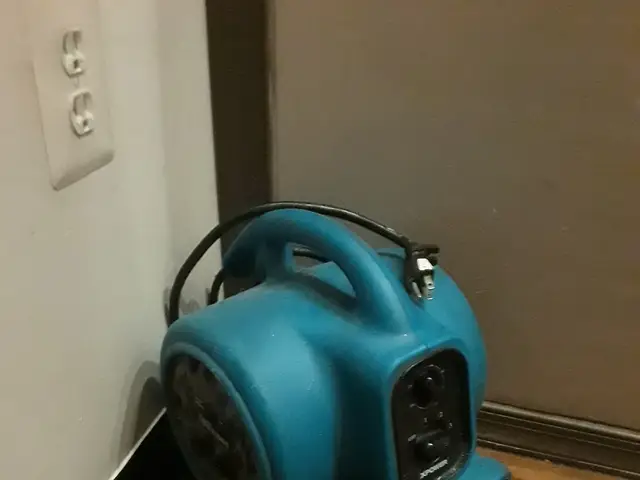
- Equipment days. Air movers and dehumidifiers are usually billed per unit per day, and the job is monitored daily until readings reach a dry standard.
- Rebuild. Mitigation (extraction and drying) and restoration (putting the house back) are often separate bills. The guide on water mitigation vs restoration explains the split.
Estimate your own job
For a rough number based on your area, water category and materials, use the water damage cost calculator. It applies the same per-square-foot ranges shown above. It is a starting point for the conversation with a crew, not a quote.
Will insurance pay for it?
Often, if the cause was sudden and accidental. The Insurance Information Institute says standard policies cover accidental discharge from plumbing, heating and air conditioning systems and appliances, while flood damage is excluded and sewer backup needs an endorsement. Read does homeowners insurance cover water damage for the details, and keep every invoice from the first day of mitigation.
Questions to ask before work starts
- Is the price per square foot, per hour, or per piece of equipment per day?
- Which category and class do you think this is, and why?
- What will be removed and what will be dried in place?
- How will you measure when it is dry, and will I get the moisture readings?
- Is rebuild included, or is that a separate estimate?
- Will you work with my insurance adjuster and send itemized invoices?
Water still spreading?
One free call connects you with a local restoration company. Lines are open 24/7 and there is no obligation.
The call is free and there is no obligation to hire. Lines are open 24/7, and one call connects you with an independent local restoration company that can look at the damage and give you a written estimate.
Common questions
How much does water damage restoration cost per square foot?
HomeAdvisor puts the typical range at $3.50 to $7.50 per square foot. Clean water losses sit near the bottom of that range and sewage or floodwater losses sit near the top, because contaminated materials have to be removed and the area disinfected.
Does homeowners insurance pay for water damage restoration?
It often does when the water came from a sudden and accidental event such as a burst pipe or a failed supply line. Gradual leaks, poor maintenance and outside floodwater are usually excluded, and flood damage needs a separate flood policy.
Why is the first water damage bill so high?
The early bill covers emergency work: water extraction, removing wet materials that cannot be saved, and several days of air movers and dehumidifiers that are checked daily. Equipment is usually billed per unit per day, so a larger or wetter area costs more.
Is mold removal included in the restoration price?
Usually not. Mold remediation is quoted separately, and HomeAdvisor lists a typical range of $1,100 to $3,400 with an average of $2,225. Drying the home quickly is the best way to avoid that extra cost.
Can I lower the cost of water damage restoration?
The biggest saving is speed. Shutting off the water, getting standing water out and starting professional drying within the first day or two limits how much drywall, flooring and insulation has to be replaced.
Sources
- HomeAdvisor: How Much Does Water Damage Restoration Cost?
- Insurance Information Institute: Facts and Statistics, Homeowners and Renters Insurance
- EPA: A Brief Guide to Mold, Moisture and Your Home
- ANSI/IICRC S500 Consensus Body: Category of Water Damage and Weather-related Events
- Insurance Information Institute: Which disasters are covered by homeowners insurance?