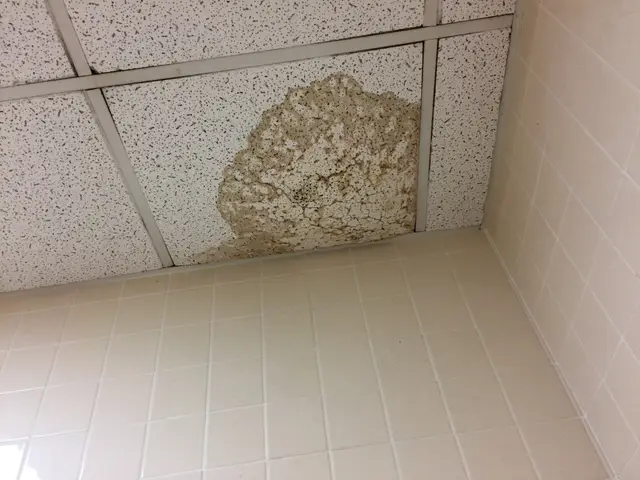
If your ceiling is leaking, move people and anything valuable out from under it, turn off power to that room at the breaker if water is near a light fixture or outlet, and put a bucket and tarp underneath. If the ceiling is bulging with water, poke a small hole at the center of the bulge with a screwdriver so the water drains into the bucket through one spot instead of bringing the ceiling down. Then work out where the water is coming from: the roof, a pipe or fixture above, or an air conditioner.
What to do in the first 15 minutes
Work through these in order. None of them needs tools beyond a screwdriver, a bucket and a flashlight.
- Clear the area. Get people and pets out from under the wet spot, especially if the ceiling sags. EPA's disaster cleanup guidance tells people to look for sagging ceilings and other structural problems before working in a water-damaged room.
- Deal with electricity. If water is dripping from or near a light fixture, ceiling fan or outlet, turn off that circuit at the breaker panel. Ready.gov warns not to touch electrical equipment if it is wet or if you are standing in water, and to turn off electricity only if it is safe to do so. If the panel is in a wet area, leave it and call an electrician.
- Stop the water if you can. If the leak could be plumbing, shut off the main water valve. The Insurance Information Institute says knowing where the main shutoff is and being able to close it quickly saves money and time.
- Catch and contain. Family Handyman's advice is to move valuables out of the area and set out a bucket and tarp to catch the water.
- Drain a bulge. Drywall will absorb water and spread it, so you are better off controlling where it comes through. Family Handyman suggests making a small hole at the center of the leak with an awl or screwdriver so water passes through into your bucket.
- Take photos. Photograph the ceiling, the floor below and anything damaged before you clean up. Your insurer will want them.
Draining a bulging ceiling safely
Only do this if the bulge is small and the surrounding ceiling looks solid. Stand on a stable step ladder off to the side, not directly underneath, and use a long screwdriver. Have a large bucket or two in place first, because more water than you expect can come out at once. If the ceiling is cracking, sagging across a wide area, or the bulge is near a light fixture, do not touch it. Close the door, keep everyone out, and get a crew on the way.
Finding the source
Water travels along rafters, joists and pipes before it drips, so the stain is not always under the leak. Family Handyman notes that roof leaks in particular can be tough to isolate, and that even with a bathroom directly above, the cause could be a leaking drain, a loose supply line or missing caulk.
| Source | Clues | Who fixes the source |
|---|---|---|
| Roof | Top-floor ceiling, appears during or after rain, often near chimneys, vents or skylights | Roofer |
| Plumbing | Under a bathroom, kitchen or laundry, any weather, worse after showers or flushes | Plumber |
| Air conditioner | Near an attic air handler or upstairs unit, in warm months when the AC runs | HVAC technician |
| Ice dams | Winter, along exterior walls near the eaves after snow | Roofer, plus attic insulation and ventilation |
| Condensation | Attic or ductwork, humid weather, droplets on pipes or ducts | HVAC technician |
The air conditioner is easy to miss. ENERGY STAR's maintenance checklist says a plugged condensate drain in a central air conditioner, furnace or heat pump can cause water damage in the house. If the leak sits under an attic unit and shows up only when the system runs, check the drain line and the pan under the unit.
Water still spreading?
One free call connects you with a local restoration company. Lines are open 24/7 and there is no obligation.
Why a wet ceiling can be dangerous
Drywall that has absorbed water gets heavy and soft, and the paper facing that holds it together weakens. Water can also pool on the back of the board, especially where insulation sits on top, until a section gives way. That is why the bulge is the first thing to deal with and why nobody should sit or sleep under a sagging ceiling.
Electricity is the other risk. Ceiling lights and fans are wired from above, so water from a roof or bathroom can run straight along the cable into the fixture box. Leave that circuit off until the area is dry and an electrician has checked it if water reached the fixture.
Drying the ceiling and what is above it
Once the source is fixed, the ceiling cavity has to dry, not just the painted surface. Family Handyman warns that moisture trapped behind drywall is prone to mold, and that for larger leaks it is often best to open up a section of the ceiling and air it out with a fan. Soaked insulation above the ceiling usually has to be pulled out, because it holds water against the drywall.
EPA's mold guidance says that if you cannot dry wet materials within 24 to 48 hours, you should assume mold is growing. A restoration crew will use a moisture meter to find how far the wet area reaches in the ceiling and walls, remove what cannot be dried, and run dehumidifiers and air movers until readings are normal. Our guide on whether wet drywall can be saved explains how crews decide what to cut out.
What ceiling repairs cost
This Old House puts drywall ceiling hole repair at about $320 to $1,300, noting that ceiling work costs more than walls because it is harder to do overhead, and overall drywall repair at about $450 to $2,000. Those figures cover the drywall work only. Fixing the roof or pipe, drying, and replacing insulation are separate. The water damage cost calculator gives a fuller estimate by room size and water type.
Insurance and ceiling leaks
The Insurance Information Institute says water that comes from the top down, such as rainfall and burst sprinklers, is generally covered by a standard homeowners policy, along with burst pipes, wind-driven rain and damage from ice dams. Coverage usually does not extend to damage from a lack of maintenance, such as an old roof that has been leaking for months. Report the leak promptly and keep the photos and any receipts. More detail is in does homeowners insurance cover water damage.
When to call a restoration crew
Call for help if the ceiling is sagging or has already come down, if water reached a light fixture or wiring, if the leak has been going for more than a day, if insulation above is soaked, or if the stain keeps growing after the source was fixed. Old stains that come back can also point to a slow hidden leak, covered in signs of hidden water damage. The ceiling water damage repair page explains what the crew does on arrival.
Water still spreading?
One free call connects you with a local restoration company. Lines are open 24/7 and there is no obligation.
A ceiling leak gets more expensive the longer the space above stays wet. One free call connects you with an independent local restoration company. Lines are open 24/7 and there is no obligation to hire.
Common questions
Should I poke a hole in a bulging ceiling with water?
Usually yes, if the bulge is small and the ceiling is not cracking or sagging badly. Family Handyman advises making a small hole at the center of the leak with an awl or screwdriver so water drains through one controlled spot into a bucket. Stand to the side, not directly under it, and if the ceiling is cracking or sagging over a wide area, leave the room and call for help instead.
Is a ceiling leak an emergency?
It is urgent if the ceiling is sagging, water is near a light fixture or wiring, or water is still actively dripping. Those mean a risk of collapse, electric shock or fast-spreading damage. A dry stain from an old leak is less urgent but still needs the source found and fixed.
Who do I call for a leak in the ceiling, a plumber or a roofer?
It depends on where the water comes from. A stain on a top-floor ceiling that shows up during rain points to the roof, while a stain under a bathroom or kitchen that appears in dry weather points to plumbing. A leak near an attic air handler in summer often means a clogged AC drain. A restoration company handles the drying in every case.
Can a leaking ceiling collapse?
Yes. Drywall that soaks up water gets heavy and loses strength, and water can pool on top of it until it gives way. EPA's disaster guidance tells people to look for sagging ceilings before entering a water-damaged room. Keep people and pets out from under any sag.
Will a water-stained ceiling dry on its own?
A small, brief leak may dry without help, but the space above the ceiling often stays wet much longer than the surface. Family Handyman notes that moisture trapped behind drywall is prone to mold, and suggests opening a section of ceiling and using a fan for larger leaks. Painting over a stain before it is dry just hides the problem.
Does homeowners insurance cover a ceiling leak?
Often, if the cause was sudden. The Insurance Information Institute says water that comes from the top down, such as rainfall, plus burst pipes and ice dams, is generally covered by a standard homeowners policy. Damage from a lack of maintenance, such as a roof left in poor repair, usually is not.
Sources
- Family Handyman: What to Do When Your Ceiling Has Water Damage
- Ready.gov: Floods
- ENERGY STAR: Heating and Cooling Maintenance Checklist
- EPA: Homeowner's and Renter's Guide to Mold Cleanup After Disasters
- Insurance Information Institute: How to protect your home from water damage
- This Old House: How Much Does it Cost to Repair Drywall?