Wet drywall can often be saved if three things are true: the water was clean, the board is dried within 24 to 48 hours, and it shows no obvious swelling with the seams still intact. That last test comes straight from EPA's water damage cleanup table. Drywall soaked by floodwater or sewage, drywall with wet insulation behind it, and drywall that has started to sag, crumble or smell musty usually has to come out, typically with a "flood cut" 12 to 18 inches above the water line.
The quick decision table
| Situation | Usual outcome | Why |
|---|---|---|
| Clean water, caught within 24 to 48 hours, board firm, seams intact | Dry in place | EPA says wallboard may be dried in place if there is no obvious swelling and seams are intact |
| Clean water, but board is swollen, soft or seams have split | Cut out and replace | EPA: if not intact, remove, discard and replace |
| Clean water, wet insulation in the wall | Cut out to reach insulation | EPA lists wet fiberglass and cellulose insulation as discard and replace |
| Gray water (washing machine, dishwasher, toilet overflow) | Usually cut out where saturated | Contaminated water gets into porous board |
| Floodwater or sewage | Cut out and replace | Category 3 water; submerged drywall must be replaced |
| Wet for days, musty smell or visible mold | Cut out, treat as a mold job | Mold grows on the paper face and back of the board |
| Sagging ceiling drywall | Remove, safety first | Wet ceiling board can hold water and fall |
Why the type of water matters more than the clock
The IICRC S500 standard sorts water by contamination. Category 1 is clean water from a supply line or similar source. Category 2 is gray water with some contamination, such as a washing machine or dishwasher overflow. Category 3 covers sewage, rising floodwater and other grossly contaminated water.
Connecticut's water damage guidance for state-leased buildings, which tells contractors to follow the IICRC S500 standard, puts it plainly: for Category 2 or 3 water, replacing all saturated porous material, including wallboard and insulation, is typically the only option. It also warns that gray water left unattended can become Category 3. Mississippi State University Extension adds that drywall which has been submerged in floodwater must be replaced.
So a quick response saves drywall from a burst supply line, but not from a flooded basement or a sewer backup. Our guide to water damage categories and classes covers the categories in more detail.
Water still spreading?
One free call connects you with a local restoration company. Lines are open 24/7 and there is no obligation.
How drywall is dried in place
When the board passes EPA's test, the goal is to dry both the face and the cavity behind it. EPA's table says to ventilate the wall cavity if possible. The Connecticut guidance describes the usual method for clean water:
- pull off the baseboard or cove base along the wet wall
- drill holes along the bottom of the wallboard, hidden behind where the baseboard sits
- point fans at the holes to push air through the cavity
- run enough fans and dehumidifiers to dry within 24 to 48 hours
- check with a moisture meter to find the wet area and confirm when it is dry
Texas A&M AgriLife Extension gives a similar tip for uninsulated walls: remove the baseboards and cut holes in the wallboard so water can drain. A wall that looks dry on the surface can still be wet inside, which is why readings matter more than touch.
What a flood cut is
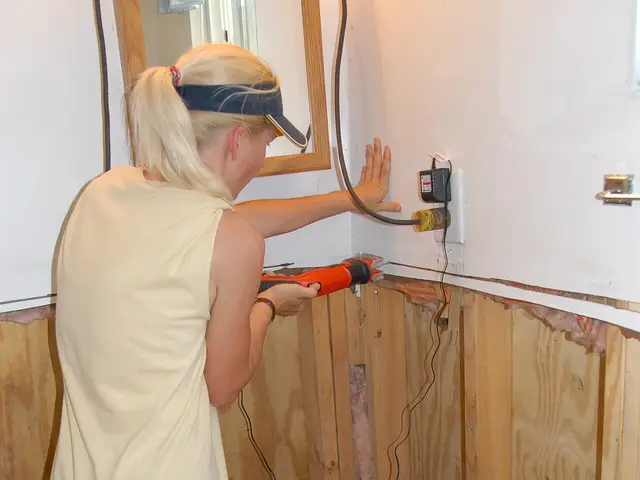
A flood cut is a straight, level cut along a wall above the water line, so the wet lower section can be removed in one piece. Texas A&M advises removing the interior surface of insulated walls to a point above the water height, often 12 to 18 inches above it, and discarding flooded drywall. Mississippi State University Extension says to remove drywall from the floor to at least the visible high water line, and notes that drywall swells and bows above the line because it wicks water upward.
In older homes with horizontal fire blocking between studs, Mississippi State advises removing another 6 to 12 inches of drywall above the fire stop if it sits at or below the waterline, so the space above it can dry.
Once the wall is open, it stays open until the framing is dry. Texas A&M says this may take up to a month after a flood and recommends that studs read below 15 percent moisture content before insulation and drywall go back on.
The insulation behind the drywall
Insulation is often what decides the matter. EPA's table lists both fiberglass and cellulose insulation as discard and replace when wet. Mississippi State says most insulation becomes unusable once water-soaked, that cellulose settles when wet and must be removed, and that fiberglass batts can become waterlogged too. If the wall is insulated and the water reached the insulation, the drywall has to come off to get it out.
Signs drywall is past saving
- the surface is swollen, bowed or bubbled
- the board is soft or crumbles when pressed
- tape seams have split or lifted
- a ceiling is sagging or has a bulge
- stains keep spreading after the leak was fixed
- there is a musty smell or visible mold
EPA's broader guidance on hidden mold lists the back side of drywall as a common place for it to grow, so a clean-looking face does not prove the back is clean. If you suspect mold behind a wall, read how fast mold grows after water damage.
What replacing drywall costs
This Old House puts typical drywall repair at about $450 to $2,000, depending on the size and type of damage, and lists ceiling hole repairs at about $320 to $1,300 because overhead work is harder. Those figures cover the drywall work itself. Drying, removing insulation and fixing the leak are separate. For an estimate based on room size and water type, use the water damage cost calculator.
When to call a crew
A small patch of clean water on an uninsulated wall, caught the same day, is often a DIY job with fans and a rented moisture meter. Anything involving gray water, floodwater, sewage, wet insulation, a ceiling, or more than one room is better handled by a restoration crew that can measure the wet area and document drying for your insurer. If the ceiling is the problem, see ceiling water damage repair, and for floors, read can wet carpet be saved.
Water still spreading?
One free call connects you with a local restoration company. Lines are open 24/7 and there is no obligation.
If your drywall is still wet, the next 24 to 48 hours decide whether it can be dried or has to be cut out. One free call connects you with an independent local restoration company. Lines are open 24/7 and there is no obligation to hire.
Common questions
How long can drywall stay wet before it needs to be replaced?
EPA says wet materials dried within 24 to 48 hours usually will not grow mold. Drywall that has been wet longer than that, or that has started to swell, crumble or smell musty, usually needs to come out. Time matters less than water type, though: drywall soaked by floodwater or sewage is replaced even if it is caught quickly.
How do you know if wet drywall needs to be replaced?
EPA's rule is that wallboard may be dried in place if there is no obvious swelling and the seams are intact. If it is swollen, soft, crumbling, sagging, or the tape seams have split, remove and replace it. Wet insulation behind it or contaminated water also means it comes out.
How high do you cut drywall after a flood?
Texas A&M AgriLife Extension says to remove the interior surface of insulated walls to a point above the water height, often 12 to 18 inches. Drywall wicks water upward, so crews use a moisture meter to find where the wet area ends and cut above that. Many cut at a height that lets them use full or half sheets for the repair.
Can you dry wet drywall with a fan?
Fans help, but fans alone rarely dry the back of the board or the wall cavity in time. Restoration crews pair air movers with dehumidifiers and often drill small holes behind the baseboard so air can move through the cavity. Do not run fans if the water was contaminated or mold is already growing, since they can spread it.
Does wet drywall always grow mold?
No. EPA notes that mold will not always appear after 48 hours, which is a guideline rather than a hard deadline. But drywall's paper face is good food for mold, so drywall that stays wet for days in a closed wall is a high risk.
Sources
- EPA: Mold Remediation in Schools and Commercial Buildings, Table 1 (Water Damage Cleanup and Mold Prevention)
- EPA: A Brief Guide to Mold, Moisture and Your Home
- Texas A&M AgriLife Extension: Dry Out Before Rebuilding
- Mississippi State University Extension: Disaster Relief, Home Cleanup and Renovation for Walls
- Connecticut DAS: Recommended Water Damage Response Actions
- This Old House: How Much Does it Cost to Repair Drywall?