Water damage categories and classes are two separate ratings from the ANSI/IICRC S500 standard, the industry reference for water damage restoration (currently the 5th edition, 2021). Category 1, 2 or 3 tells you how contaminated the water is. Class 1, 2, 3 or 4 tells you how much water the materials absorbed, which sets how much drying equipment and time the job needs. Every job gets one of each, so a burst pipe that soaked a whole room might be "Category 1, Class 3."
Knowing both helps you understand an estimate, talk to your insurer, and decide whether it is safe to clean anything yourself.
The three categories of water
The S500 defines categories by the source of the water and its quality after it contacts materials in the home. Time and temperature can make it worse.
Category 1: clean water
Category 1 water "originates from a sanitary water source," according to the S500 text quoted by R&R Magazine, and does not pose a substantial risk from skin contact, swallowing or breathing it. Examples include broken water supply lines, tub or sink overflows with no contaminants, appliance supply line failures, melting ice or snow, falling rainwater, and broken toilet tanks.
Category 2: gray water
Category 2 water "contains significant contamination and has the potential to cause discomfort or sickness if contacted or consumed by humans." The S500 examples include discharge from dishwashers or washing machines, washing machine overflows, toilet bowl overflows with some urine but no feces, seepage due to hydrostatic pressure, broken aquariums and punctured water beds.
Category 3: black water
Category 3 water "is grossly contaminated and can contain pathogenic, toxigenic or other harmful agents and can cause significant adverse reactions to humans if contacted or consumed." The S500 examples include sewage, waste line backflows that originate from beyond any trap regardless of visible content or color, all forms of flooding from seawater, and rising water from rivers or streams.
Do not wade in or clean Category 3 water yourself. Keep children and pets out. A sewage backup cleanup crew uses protective equipment and removes contaminated porous materials.
What about storm water?
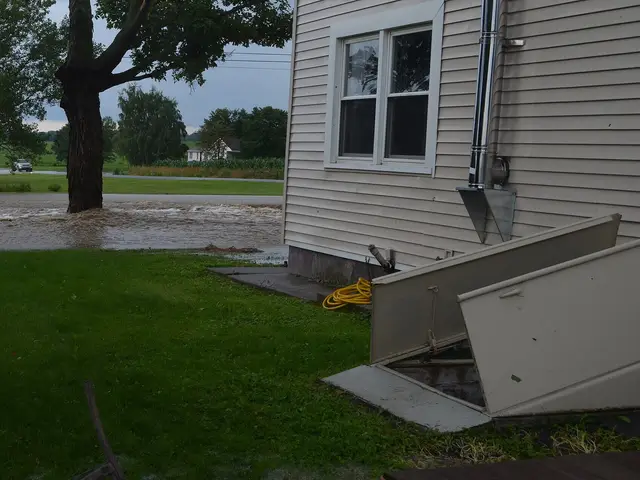
The S500 lists wind-driven rain from hurricanes and tropical storms as something that "can" be Category 3 when it is contaminated. In March 2026 the S500 Consensus Body published a position statement clarifying that top-down water, wind-driven rain and weather-related water are "not automatically considered Category 3." The restorer inspects, gathers information, and then makes a preliminary determination.
The four classes of water damage
Class measures the evaporation load: how much water is in the materials, based on the share of wet porous materials across the combined floor, wall and ceiling surface area of the affected space. R&R Magazine summarizes the thresholds:
- Class 1: the least water absorption. Wet porous materials make up less than about 5 percent of the combined surface area. Often part of one room, with mostly low-porosity materials.
- Class 2: wet porous materials make up between about 5 and 40 percent of the surface area. Typically carpet and pad plus the lower part of walls in a room.
- Class 3: wet porous materials make up more than about 40 percent. Water often came from above, soaking ceilings, walls, insulation and carpet.
- Class 4: specialty drying situations. Water is held deep inside low-porosity, dense materials such as hardwood, plaster, brick, concrete and stone. These need longer drying, often with low-humidity dehumidification.
Class sets the equipment plan: how many air movers, how much dehumidifier capacity, and roughly how many days. The how long does water damage take to dry guide shows typical timelines.
Water still spreading?
One free call connects you with a local restoration company. Lines are open 24/7 and there is no obligation.
Categories and classes side by side
| Rating | What it measures | Examples | Typical response | HomeAdvisor 2026 cost |
|---|---|---|---|---|
| Category 1 | Clean water | Supply line, sink overflow, rain | Extract and dry in place if fast | About $3.50 per sq ft |
| Category 2 | Significant contamination | Washer or dishwasher discharge, toilet bowl with urine only | Remove pad and some porous items, clean, dry | About $5.25 per sq ft |
| Category 3 | Gross contamination | Sewage, floodwater, seawater | Remove porous materials, clean, treat, dry | About $7.50 per sq ft |
| Class 1 | Under about 5% of surfaces wet | Small area, low absorption | Few air movers, short drying | $150 to $400 |
| Class 2 | About 5 to 40% wet | Carpet and lower walls | Air movers and dehumidifiers | $500 to $1,000 |
| Class 3 | Over about 40% wet | Ceiling, walls, insulation, carpet | Heavy equipment, more demolition | $1,000 to $3,000 |
| Class 4 | Deeply held water | Hardwood, plaster, concrete | Specialty drying, long timeline | $20,000 to $100,000 |
Costs are HomeAdvisor's national ranges and overlap heavily in real jobs. The water damage restoration cost guide explains what drives the total, and the water damage cost calculator lets you plug in your own area and category.
How categories change over time
The category assigned on day one is not fixed. R&R Magazine's summary of the S500 says the category "can change during the course of the project," with elapsed time and elevated temperature as the main factors. A clean supply-line leak that soaks into carpet in a warm house for several days can degrade to Category 2 or 3.
A single loss can also involve more than one category. Cleanfax describes clean water from a pipe leak mixing with contaminants in parts of the house, which raises the risk in those areas. That is one reason the crew tests and inspects rather than judging by appearance.
What it means for you
Safety
Category 2 and 3 water can make people sick. Wear gloves and boots around Category 2, and stay out of Category 3 altogether. Turn off power to wet areas only from a dry spot.
Insurance
The cause behind the category often decides coverage. A Category 1 burst pipe is usually covered; Category 3 floodwater needs flood insurance, and sewage backup needs an endorsement. See does homeowners insurance cover water damage.
Your estimate
Ask the crew which category and class they assigned and why, and make sure it is written on the estimate and moisture log. It explains why some materials are dried and others removed.
Water still spreading?
One free call connects you with a local restoration company. Lines are open 24/7 and there is no obligation.
A local restoration company can assess the category and class on site and explain what that means for drying time and cost. The call is free, lines are open 24/7, and there is no obligation to hire.
Common questions
What is the difference between a water damage category and a class?
Category describes contamination: how dirty the water is and how much of a health risk it poses. Class describes the amount of water absorbed and the evaporation load, which tells the crew how much drying equipment the job needs. A job has one of each, for example Category 1, Class 3.
Is a toilet overflow Category 2 or Category 3?
It depends on what was in the bowl and where the water came from. The S500 lists toilet bowl overflows with some urine but no feces as Category 2, while toilet backflows that originate beyond the toilet trap are Category 3.
Can Category 1 water become Category 3?
Yes. The S500 says the category initially determined can change during a project, and elapsed time and elevated temperature are the main drivers. Clean water that sits on carpet and drywall can pick up contamination and support microbial growth.
Is rainwater from a storm Category 3?
Not automatically. In a March 2026 position statement, the IICRC S500 Consensus Body said top-down water, wind-driven rain and water from weather-related events are not automatically Category 3. The restorer decides after inspection based on whether the water is grossly contaminated.
Why does the category matter for my bill?
Higher categories mean more material is removed instead of dried, plus protective gear and cleaning. HomeAdvisor's 2026 data puts clean-water jobs around $3.50 per square foot, gray water around $5.25 and black water around $7.50.
Sources
- ANSI/IICRC S500 Consensus Body: Category of Water Damage and Weather-related Events (March 2026)
- R&R Magazine: Applying IICRC Categories of Water to a Job Situation
- R&R Magazine: How to Identify the Classes of Water Damage
- Cleanfax: Understanding Water Damage Categories
- HomeAdvisor: How Much Does Water Damage Restoration Cost?