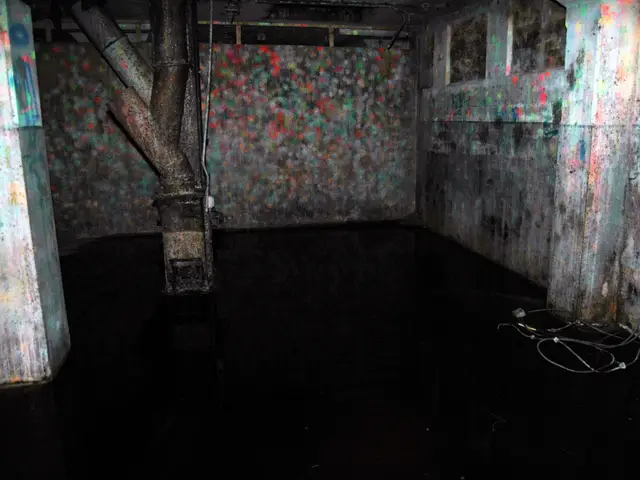
Water extraction services pull liquid water out of a home with pumps, flood extractors and weighted carpet tools, and Fixr prices the work at $3.75 to $7.50 per square foot depending on how contaminated the water is. If you have standing water or soaked carpet, stop the source, keep clear of anything electrical and call. The call is free and the phone line is open 24/7. It connects you with an independent local restoration company.
Before anyone touches the water
Extraction only works once the water has stopped coming in, so these steps come first.
- Close the main valve, or the fixture valve if you know which fixture failed.
- Leave the power alone if the panel is in the wet area. CDC says that if you would have to enter standing water to reach the main switch, an electrician should turn it off.
- Measure the depth against a wall or stair and photograph it. That number decides which equipment the crew brings.
- Lift small items off wet carpet so the tools can reach the floor. Leave heavy furniture where it is and mention it on the call.

Why extraction comes before drying
Moving water as a liquid is far cheaper than turning it into vapor. Writing in Restoration & Remediation magazine in November 2025, Lorne McIntyre puts it this way: "Every gallon left behind must later be evaporated, and evaporation demands exponentially more time, equipment and energy." He says thorough extraction can cut drying time by days.
The same article says that once liquid removal reaches 90 to 95 percent efficiency, what remains is best handled by controlled evaporation and dehumidification. That handover matters because of the clock. EPA ties mold prevention to drying wet materials within 24 to 48 hours, and water left in the pad works against that.
Water still spreading?
One free call connects you with a local restoration company. Lines are open 24/7 and there is no obligation.
The equipment and what each tool does
These are the tools you may see on the job. A crew usually uses more than one, moving from the deepest water to the last of the moisture in the carpet.
| Tool | What it removes | Limit | Source |
|---|---|---|---|
| Submersible pump | Standing water in bulk | For depth, not for carpet or pad | R&R |
| Truck-mounted or electric flood extractor | Large volumes under sustained vacuum, up to hundreds of gallons in minutes | Hose length reduces power, so keep runs short | R&R, Legend Brands |
| Speed wand | Surface water from carpet face yarns, up to 1,000 sq ft per hour | Does not pull through backing or pad | R&R |
| Weighted compression extractor | Water squeezed from pad using body weight plus vacuum | A carpet tool, not for hard floors | R&R |
| Squeegee wand or towels | Water on tile, marble and hardwood | Used because metal-edged wands can damage these floors | R&R |
| Wet/dry shop vac | Small clean spills | Lacks sustained vacuum for soaked materials | R&R, Legend Brands |
Legend Brands, which makes extraction equipment, lists one flood extractor pump at up to 50 gallons per minute. Treat that as a maker's rating rather than what any given job achieves.
How the method gets chosen
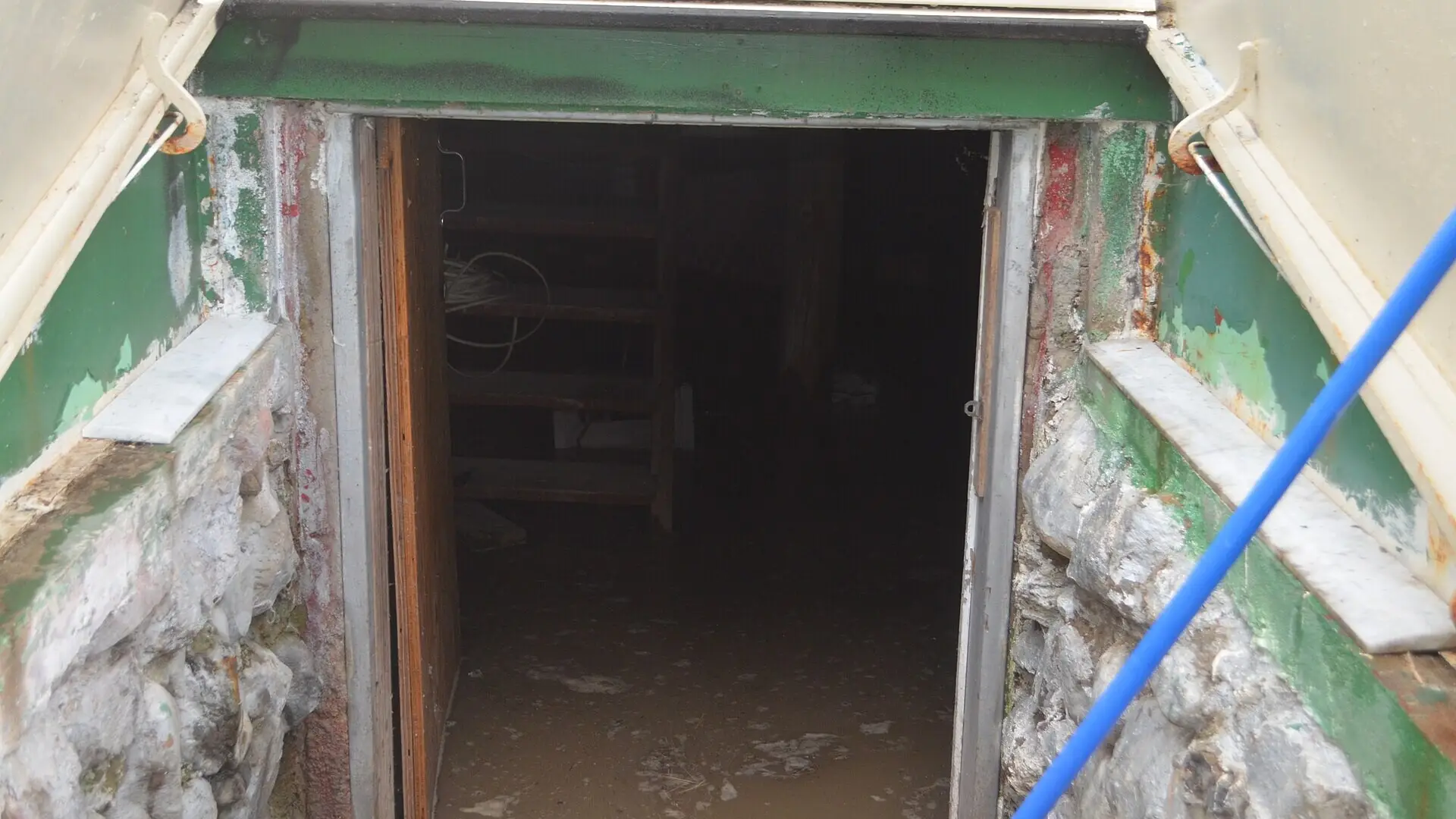
Depth comes first. Several feet of water cannot simply be pumped out as fast as possible, because EPA warns that doing so may crack and collapse walls and floors. Deep water may have to come down in stages. Our flooded basement cleanup page covers below-grade jobs.
Flooring comes next. McIntyre warns that metal-edged wands on tile, marble or hardwood can cause thousands of dollars in damage, and his rule of thumb is that anything hard and shiny should not meet a carpet wand. He recommends a squeegee wand or towels for those floors.
Carpet is judged by the pad. He says extraction should continue until the pad gives up no liquid when squeezed by hand. Drying the carpet in place is limited to clean water, undamaged surfaces below and enough dehumidifier capacity. Otherwise the carpet and pad come up, and the guide on whether wet carpet can be saved goes through that call.
Contamination changes everything else. Sewage or floodwater means protective gear and disinfection on top of extraction, which is what water remediation is about.
What extraction costs
Fixr's January 2025 figures price extraction by water type. These rates are for getting the water out, not for rebuilding what it damaged.
| Item | Cost (Fixr) |
|---|---|
| Clean water | $3.75 to $4.25 per sq ft |
| Gray water | $4.10 to $6.50 per sq ft |
| Black water | $7 to $7.50 per sq ft |
| Crew labor | $70 to $200 per hour |
| Emergency fee, where charged | $50 to $200 |
At those rates, a 300 square foot room works out to $1,125 to $1,275 for clean water and $2,100 to $2,250 for black water. Fixr's national average for a whole water damage job is $3,000, with most between $1,200 and $5,000. Run your own area and water type through the water damage cost calculator.
Insurance depends on what caused the water. Our guide on whether homeowners insurance covers water damage sorts the common causes.
What happens after the water is out
Extraction is the first stage, not the whole job. Air movers and dehumidifiers take over, and moisture readings show when materials are actually dry. Dense materials hold water longer, and how long water damage takes to dry has the detail.
What you can do, and what to leave
You can mop a hard floor, blot with towels and run a wet vacuum on a small area of clean water, plugged in somewhere dry. CDC says never to run electrical equipment while standing in water.
Leave these alone:
- Water that smells like sewage. EPA says damage from contaminated water calls for a professional with that experience.
- Renting a gas pump for indoor use. CDC says never to run a gasoline engine inside a home, basement or garage, or within 20 feet of a door, window or vent.
- A ceiling that is sagging, or anywhere you smell gas. CDC's advice for gas is to turn off the main valve if you can, open windows and leave the house.
What to ask on the phone
- When can you realistically get here?
- What will you use on the carpet pad: a wand or a deep extraction tool?
- What will you use on my hardwood or tile?
- Can your hoses reach this room, or do you need portable equipment?
- Is the job priced by the square foot or by the hour, and is there an emergency fee?
- Will you share moisture readings once the water is out?
Water still spreading?
One free call connects you with a local restoration company. Lines are open 24/7 and there is no obligation.
There is no cost to call and no obligation to hire. A puddle of clean water on tile is a mop job. Water in carpet, under flooring or too deep to mop needs equipment you are unlikely to own.
Common questions
What is the difference between water extraction and drying?
Extraction removes water that is still liquid, using pumps and vacuum tools. Drying deals with the moisture left in materials, using air movers and dehumidifiers. Restoration & Remediation magazine notes that every gallon left behind has to be evaporated later, which takes more time, equipment and energy.
How much do water extraction services cost?
Fixr lists extraction at $3.75 to $4.25 per square foot for clean water, $4.10 to $6.50 for gray water and $7 to $7.50 for black water. Some companies also add an emergency fee, which Fixr puts at $50 to $200. Ask how the job will be priced before work starts.
Can I use a shop vac instead of hiring a company?
For a small clean spill on a hard floor, yes. Legend Brands, which makes extraction equipment, calls wet/dry vacuums the worst option for flood extraction, and a shop vac cannot pull water out of carpet pad. If the pad is soaked, the water stays there until someone removes it.
Can carpet stay in place after extraction?
Sometimes. Restoration & Remediation magazine limits in-place drying to clean Category 1 water, no damage to the surfaces underneath, enough dehumidifier capacity and a proper deep extraction tool. Sewage-soaked carpet does not meet that test.
Do I have to use the company I am connected with?
No. Calling costs nothing and hiring is your choice. Ask what equipment they use and how they charge, then decide.
Sources
- Restoration & Remediation: Extraction, the Overlooked Key to Faster, More Effective Restorative Drying (November 2025)
- Legend Brands Tech Tips: Maximizing Extraction Efficiency (March 2023)
- Fixr: Water Damage Restoration Cost (updated January 2025)
- EPA: A Brief Guide to Mold, Moisture and Your Home
- EPA: Flooded Homes, Doing it Yourself
- CDC: Reentering Your Flooded Home