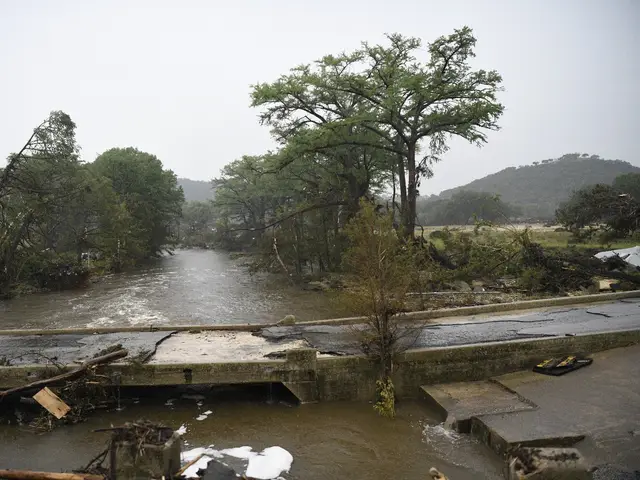
Storm and flood damage cleanup starts outside the house: wait until local officials say it is safe to return, do not go in if the power is still on to flooded rooms or the building looks damaged, and never run a generator indoors. Once inside, photograph everything before you move it, then call. One free call connects you with an independent local restoration company, lines are open 24/7. FEMA's flood insurance program estimates that just 1 inch of floodwater can cause roughly $25,000 of damage, so getting water out and drying started early matters.
The first 10 minutes back at the house
- Look before you enter. Sagging roofs, cracked foundations, shifted walls and downed power lines are reasons to stay out.
- If you smell gas, leave and call the gas company from a safe distance.
- Turn off the main power at the breaker only if you can reach it while standing on a dry surface. Otherwise ask the utility to disconnect it.
- Take photos and video of every room, the waterline on the walls and damaged belongings, before anything is moved.
- Keep a portable generator outside. EPA says to use generators only outside and at least 20 feet from buildings, because carbon monoxide can kill in minutes.
- Call your insurer and a restoration company. After a large storm, crews book up fast.
Storm water and floodwater are not the same claim
How the water got in decides the cleanup method and the insurance policy.
- Wind and rain from above: water entering through storm damage to the roof, windows or siding. This is usually a homeowners insurance claim. The IICRC's S500 consensus body said in 2026 that top-down water and wind-driven rain are not automatically Category 3, so the category depends on what the crew finds.
- Rising water from outside: river, stream, storm surge or surface water flowing in at ground level. FEMA's flood insurance program says most homeowners and renters policies do not cover flood damage, and only flood insurance does.
- Water up through the drains: an overloaded sewer during heavy rain. That needs a backup endorsement, and the sewage backup cleanup page covers the safety side.
Water still spreading?
One free call connects you with a local restoration company. Lines are open 24/7 and there is no obligation.
What the crew does after a storm or flood
The company you are connected with should work to the ANSI/IICRC S500 standard for water damage restoration:
- Secure the building. EPA advises getting roof, window and door tarps in place before cleanup, so more rain does not undo the work.
- Assess category and depth. Floodwater from outside usually carries mud, sewage and chemicals and is handled as contaminated water.
- Pump out in stages when water is deep. EPA warns that if water is several feet deep, removing it too quickly may make the walls and floor crack and collapse.
- Muck-out and tear-out. Mud, silt, wet carpet, drywall and insulation below the waterline are removed. EPA says to throw away materials that soak up a lot of water and cannot be cleaned and dried.
- Clean and disinfect remaining surfaces and framing.
- Dry and monitor. EPA notes drying can take several days to weeks. Crews track it with moisture readings so rebuilding does not trap water in the walls.
Storm and flood damage cleanup cost
| Item | Typical cost | Source |
|---|---|---|
| Damage from 1 inch of floodwater | roughly $25,000 | FEMA NFIP |
| Emergency roof tarp, national average | $450 | HomeAdvisor |
| Roof tarp, full range | $150 to $3,300 | HomeAdvisor |
| Emergency tarping premium | 50% to 100% more than scheduled | HomeAdvisor |
| Emergency tarp, 1,500 sq ft area | $1,500 to $4,200 | HomeAdvisor |
Water extraction and drying are priced on top of tarping, by area and water category. The water damage cost calculator gives a rough figure, and the water damage risk index shows how flood declarations vary by city.
The insurance side
Flood insurance through the NFIP has a waiting period: FEMA says it is typically 30 days from purchase before the policy takes effect, with some exceptions such as a purchase tied to a mortgage. The same FEMA flyer notes that 99% of US counties have experienced a flood, so living outside a mapped flood zone is not a reason to skip the policy.
File quickly, give the adjuster your photos and video, and keep samples of damaged flooring. The page on flood insurance vs homeowners insurance explains how to tell which policy applies, and the water damage insurance claim tips cover documentation.
How long it takes
Tarping and pumping are first-day jobs. Muck-out and tear-out usually take one to a few days depending on size. Drying runs several days to weeks, according to EPA, before rebuilding can start. After a regional disaster, material shortages and adjuster backlogs can stretch the full repair out considerably.
What you can safely do while you wait
- Wear rubber boots, rubber gloves and eye protection in floodwater, and wash with soap and clean water afterward.
- Move undamaged belongings to a dry floor.
- Open windows and doors when the air outside is drier than inside.
- Do not use the HVAC to dry the house if any part of it was flooded. EPA says not to.
- Do not walk or drive through moving water. Even shallow fast-moving floodwater can knock an adult over.
When it becomes dangerous
- Power lines are down, or water has reached the panel or outlets.
- Gas appliances, the furnace or the water heater were underwater.
- Walls, floors or the roof look damaged or are moving.
- Floodwater sat in the house for more than a day, which raises the odds of mold. See mold remediation.
What to ask on the phone
- Can you tarp the roof or openings, or do I need a separate roofer?
- Do you handle contaminated floodwater, and are your technicians IICRC certified?
- Will you pump deep water in stages to protect the foundation?
- Will you document the waterline and damage for both my homeowners and flood claims?
- Do you bill insurers directly, and is there a storm surcharge or emergency fee?
- When can you start, and how long will drying equipment be on site?
Water still spreading?
One free call connects you with a local restoration company. Lines are open 24/7 and there is no obligation.
The call is free and there is no obligation to hire. If only one room took on rainwater through a damaged window, you may be dealing with a small job. If the water came up from outside, it is a flood loss with contamination, and professional extraction and drying is the safer route.
Common questions
Does homeowners insurance cover flood damage from a storm?
Not flooding. FEMA's flood insurance program says most homeowners and renters policies do not cover flood damage. Wind and wind-driven rain that enter through storm damage to the roof or windows are usually covered by homeowners insurance, while rising surface water needs a flood policy.
How long before a new flood insurance policy takes effect?
FEMA says there is typically a 30-day waiting period from the date of purchase before an NFIP policy goes into effect. There are exceptions, such as a policy bought in connection with a mortgage, but you generally cannot buy cover when a storm is already forecast and expect it to apply.
How much does one inch of floodwater cost?
FEMA's National Flood Insurance Program says just 1 inch of floodwater can cause roughly $25,000 of damage to a home. Costs rise with depth, the size of the home and how much finished space and contents were below the waterline.
Is floodwater always treated as contaminated?
Water that rose from rivers, streams or the ground is generally treated as contaminated because it can carry sewage, chemicals and debris. The IICRC has also clarified that rain coming in from above during a storm is not automatically Category 3, so the crew should judge it from what they find on site.
Should I start cleaning before the adjuster arrives?
Yes, take reasonable steps to prevent more damage, such as tarping and removing water, but photograph and video everything first. Keep damaged items or samples, such as a piece of carpet, and every receipt for emergency work.
Sources
- FEMA NFIP: Just One Inch of Floodwater flyer
- FEMA: Waiting Period for Activating Flood Policy
- IICRC: S500 Consensus Body position statement on weather-related water damage (March 2026)
- EPA: Flooded Homes, Doing it Yourself
- EPA: Flood Cleanup to Protect Indoor Air and Your Health
- HomeAdvisor: How Much Does It Cost to Tarp a Roof?