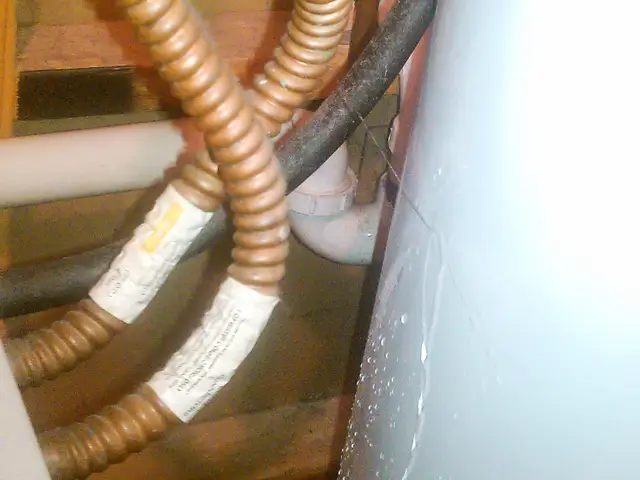
Water heater leak cleanup begins with shutting the heater down: close the cold water valve on the pipe going into the top of the tank, then switch off the breaker for an electric heater or turn a gas heater's control to off. Do not drain the tank or reach into the water until it has cooled, because it can scald. Then call. One free call connects you with an independent local restoration company, 24/7, to dry the floor, walls and anything the water ran under.
The next 10 minutes
- Close the cold water inlet valve. It is on the supply pipe at the top of the tank. If it will not turn, close the main water valve to the house.
- Cut the energy. Electric: turn off the dedicated breaker. Gas: turn the control knob to off. If you smell gas, leave the house and call the gas company from outside.
- Keep children and pets away from the puddle. Water from the tank can be hot.
- Find the leak. Water from the top fittings or the relief valve pipe is often fixable. Water coming from under the tank or out of the jacket usually means the tank itself has failed.
- Photograph the heater, its label (age and model) and the wet area.
- Call a plumber for the heater and a restoration company for the water.
Why water heaters leak
- Corroded tank. Sediment and age wear through the steel lining, usually from the bottom. This is the most common end-of-life failure, and it cannot be patched.
- Temperature and pressure relief valve. The valve on the side or top lets water out when pressure or temperature gets too high. A dripping relief valve can be a failed valve or a real pressure problem, so do not cap or plug it.
- Drain valve. The spigot near the bottom can loosen or crack, especially plastic ones.
- Supply connections. Fittings and flexible connectors at the top can corrode or loosen. The Insurance Information Institute advises checking hoses to water heaters, dishwashers, washing machines and refrigerator icemakers every year and replacing them every five to seven years.
HomeAdvisor puts the lifespan of tank-style water heaters at about six to 15 years with regular maintenance. Our guide on what to do when your water heater is leaking helps you tell a repair from a replacement.
Water still spreading?
One free call connects you with a local restoration company. Lines are open 24/7 and there is no obligation.
What the crew does on arrival
The company you are connected with should follow the ANSI/IICRC S500 standard for water damage restoration:
- Confirm the heater is shut down and the water and energy supply are off.
- Moisture mapping. Water heaters often sit in closets, garages, basements or attics, and leaks run under walls, into the next room and under flooring. Meters and thermal imaging find how far it went.
- Extraction of standing water and wet carpet.
- Removal of wet baseboard, carpet pad and the bottom of soaked drywall in the heater closet, so the cavity can dry.
- Air movers and dehumidifiers, set up around the heater space and adjoining rooms.
- Monitoring with daily readings until the subfloor, framing and drywall reach dry targets.
The crew does not usually replace the heater. That is a plumber's job, and the two can work around each other.
What water heater leaks cost
| Item | Typical cost | Source |
|---|---|---|
| Water heater replacement, national average | $1,347 | HomeAdvisor |
| Replacement, most common range | $882 to $1,826 | HomeAdvisor |
| Tank-style, installed | $600 to $2,500 | HomeAdvisor |
| Tankless, installed | $1,400 to $3,900 | HomeAdvisor |
| Water heater repair, national average | $616 | HomeAdvisor |
| Temperature and pressure relief valve | $20 to $200 | HomeAdvisor |
| Water damage restoration, national average | $3,868 | HomeAdvisor |
| Clean water cleanup | about $3.50 per sq ft | HomeAdvisor |
Water from a supply line or tank is usually Category 1 clean water, the cheapest to dry, if it is caught early. A slow leak that sat for days can involve mold and costs more. Get a rough number for your area with the water damage cost calculator.
The insurance side
The Insurance Information Institute lists "accidental discharge or overflow of water or steam" from a plumbing, heating or air conditioning system or household appliance as covered under HO-2 and higher policies. In practice, a sudden tank failure usually means the water damage to floors and walls is covered, while the heater itself, as a worn-out appliance, is not. Policies also exclude damage from lack of maintenance, so a heater that dripped for months is harder to claim.
Keep the old tank or photos of the failure point and the data plate. Our page on whether homeowners insurance covers water damage explains sudden versus gradual leaks.
How long it takes
A replacement heater is often installed in a day once the plumber has the unit. Drying the surrounding area usually takes several days with equipment running. EPA says materials dried within 24 to 48 hours usually avoid mold, so starting drying the same day the leak is found makes a real difference.
What you can safely do while you wait
- Mop and towel up water once it has cooled.
- Move boxes and stored items out of the heater closet or basement corner.
- Put a fan and dehumidifier nearby if the outlet is dry and away from the water.
- Once the tank has cooled and the plumber agrees, the tank can be drained with a garden hose to a floor drain or outside.
When it becomes dangerous
- You smell gas, or the gas burner area is wet. Leave and call the gas utility.
- Water is reaching the electrical panel, outlets or the heater's own wiring.
- The relief valve is spraying hot water or steam. Shut everything down and keep away.
- The heater is in an attic or upstairs closet and the ceiling below is wet or sagging. See ceiling water damage repair.
What to ask on the phone
- Can you check the walls and floor in the next room, not just the heater closet?
- Are your technicians IICRC certified?
- Will you work around the plumber's schedule for the replacement?
- Do you provide moisture readings and photos for my insurance claim?
- Is there an emergency fee, and do you bill insurers directly?
- Do you handle drywall and flooring repairs after drying?
Water still spreading?
One free call connects you with a local restoration company. Lines are open 24/7 and there is no obligation.
The call is free and there is no obligation to hire. A few cups of water from a relief valve on a concrete floor may only need a plumber. Water under flooring, in drywall or in the room below needs drying equipment, and that is what the restoration company brings. If other appliances are leaking too, see appliance leak water damage.
Common questions
What should I do first when my water heater is leaking?
Close the cold water supply valve on the pipe entering the top of the tank. Then turn off the power at the breaker for an electric unit, or turn the gas control valve to off for a gas unit. Keep people away from the water, which can be hot enough to scald.
Can a leaking water heater be repaired?
Leaks from fittings, the drain valve or the temperature and pressure relief valve can often be repaired. HomeAdvisor lists a relief valve at $20 to $200 and the average water heater repair at $616. A leak from the tank body itself usually means the tank has corroded through and needs replacing.
How much does it cost to replace a leaking water heater?
HomeAdvisor reports a national average of $1,347, with most replacements between $882 and $1,826. Tank models run $600 to $2,500 installed and tankless models $1,400 to $3,900. Drying and repairing the surrounding floor and walls is a separate cost.
Does insurance cover water heater leak damage?
Usually the water damage, not the heater. The Insurance Information Institute lists sudden discharge of water from a household appliance or a plumbing or heating system as covered under HO-2 and higher policies, but wear and tear and lack of maintenance are not covered.
How long do water heaters last?
HomeAdvisor says tank-style water heaters last about six to 15 years with regular maintenance, and tankless units 20 years or more. A leak in a tank near the end of that range is usually a sign to replace it rather than repair it.
Sources
- HomeAdvisor: How Much Does It Cost to Install a Water Heater?
- HomeAdvisor: How Much Does Water Heater Repair Cost?
- HomeAdvisor: How Much Does Water Damage Restoration Cost?
- Insurance Information Institute: Which disasters are covered by homeowners insurance?
- Insurance Information Institute: How to protect your home from water damage
- EPA: A Brief Guide to Mold, Moisture and Your Home